The energy transition of shipping is no longer only a matter of environmental compliance. It is directly linked to energy security, geopolitical instability, fuel costs, port infrastructure, financing and the competitiveness of Greek and European shipping.
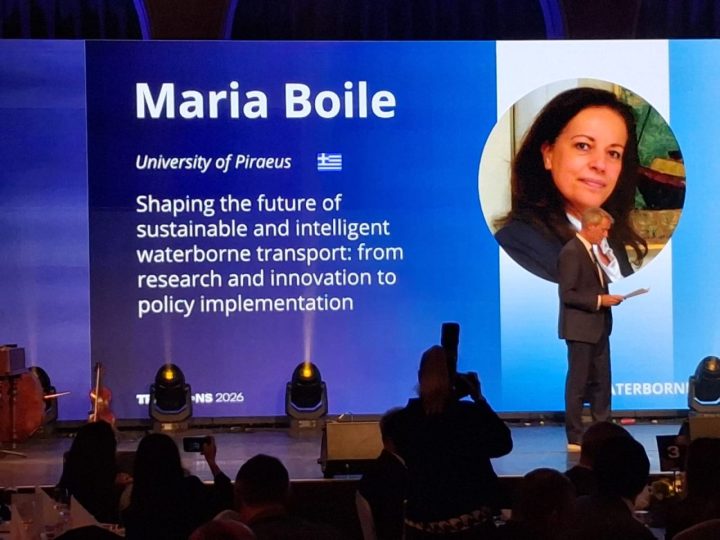
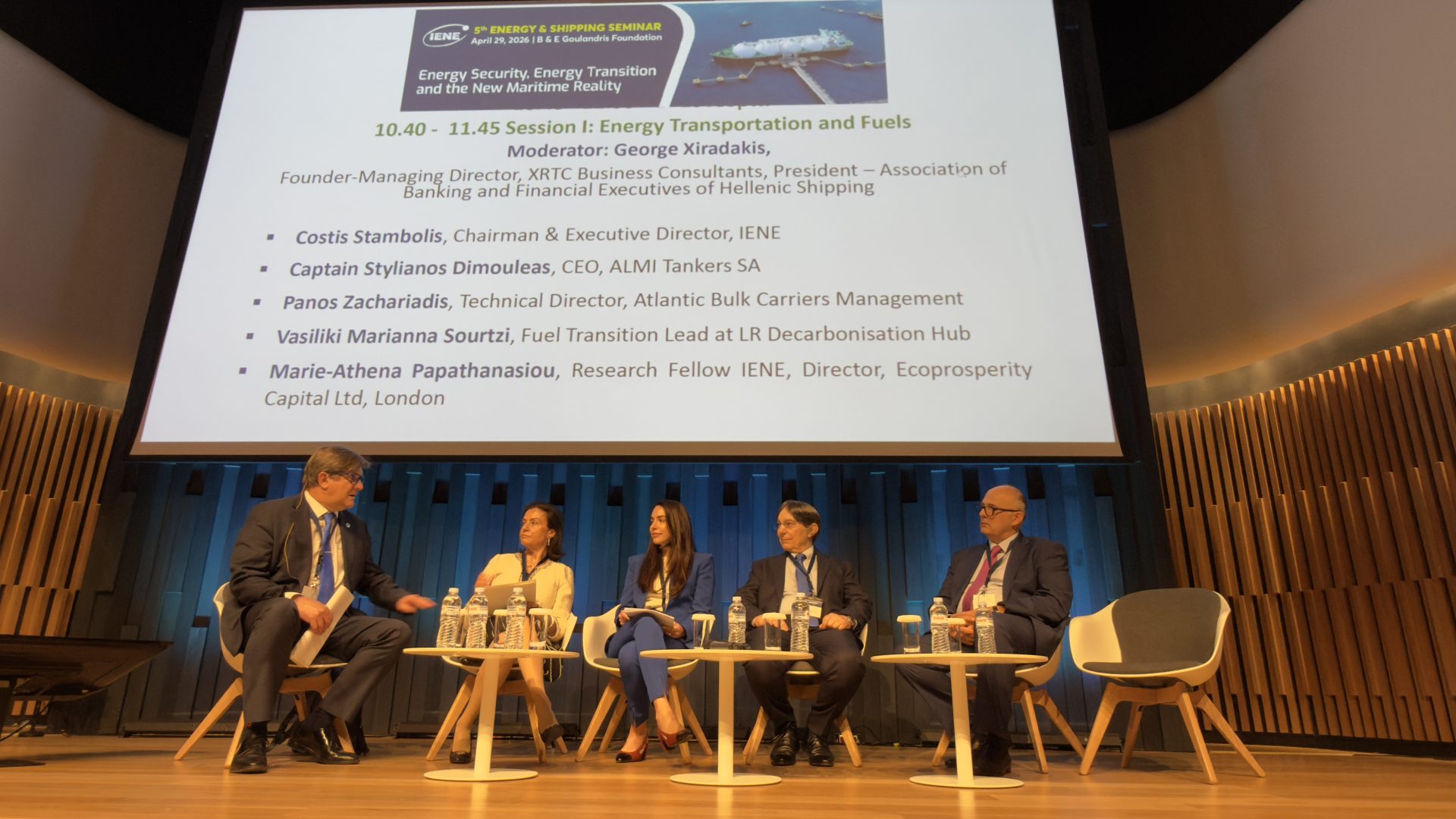
This was the central framework of the 5th Energy & Shipping Seminar of the Institute of Energy for South-East Europe — IENE, entitled “Energy Security, Energy Transition and the New Maritime Reality”, which took place on 29 April 2026 at the Basil & Elise Goulandris Foundation in Athens. The programme of the seminar covered energy transportation and marine fuels, ship certification for energy cargoes, international oil, LNG and LPG markets, geopolitical disruptions, safety, insurance, and the economic and environmental challenges facing Greek shipping.
The discussion highlighted one key conclusion: the maritime transition cannot be designed in isolation from geopolitics and energy security. Decarbonisation, alternative fuels and new technologies must be integrated into a broader framework of resilience, investment realism and strategic planning.
Key Conclusions
The energy transition of shipping must be treated as part of energy security, not as a separate environmental agenda.
The market is moving more rapidly towards vessels capable of using alternative fuels, but the main bottleneck is now shifting to the availability, cost and infrastructure of those fuels.
There is no single fuel that will dominate across the whole of shipping. The transition will require a portfolio of solutions: LNG, biofuels, methanol, ammonia, hydrogen, e-fuels, energy efficiency and energy-saving technologies.
Ports and bunkering hubs will be a critical field of the transition, as new fuels require infrastructure for storage, separation, safety, certification and specialised handling.
Greece, due to its maritime strength and geographic position, can claim a role in the new geography of maritime energy, particularly in the Eastern Mediterranean, coastal ferry services and short sea shipping.
Why Does Energy Security Directly Concern Shipping?
Shipping is a critical part of the global energy system. Oil, LNG, LPG, raw materials, equipment and energy products move through sea routes that are exposed to armed conflicts, geopolitical tensions, restrictions on passage, and climate-related or technical disruptions.
The discussion highlighted that points such as the Suez Canal, the Strait of Malacca, the Red Sea, the Black Sea and other critical routes function as potential bottlenecks. A disruption in one of these passages does not affect shipping alone; it affects energy prices, insurance premiums, freight rates, cargo delivery times and, ultimately, the stability of supply chains.
Energy security, therefore, is not only about the availability of fuels. It also concerns the ability of a country, an economy or a supply chain to secure the necessary energy products, in the required quantities, at predictable cost and with resilience against external shocks.
From this perspective, the transition to more diversified fuel chains can also function as a tool of strategic resilience. The more diversified the sources of production, technologies and bunkering hubs are, the more difficult it becomes for maritime energy to be used as an instrument of geopolitical pressure.
Where Does the Transition to Alternative Fuels Stand Today?
The discussion showed that the market has already begun to adapt. New orderbooks show a significant increase in vessels capable of using alternative fuels. According to the data presented, while in 2020 alternative fuel-capable ships accounted for a small share of new orders, they now exceed 50% in certain major vessel categories.
This development is important, but it is not sufficient. The existence of vessels that can use alternative fuels does not mean that those fuels are available, economically competitive or supported by adequate infrastructure.
The core issue is now shifting from the vessel to the fuel. Ordering a ship that can use methanol, ammonia or another alternative fuel is only one part of the equation. The critical question is whether there will be sufficient production, certification, storage, safe transportation and bunkering capacity at the ports serving major shipping routes.
At the same time, the economic gap remains significant. Green or low-carbon fuels still carry a higher cost compared with conventional fuels. No single mechanism — whether regulation, carbon pricing, financing or subsidies — is sufficient on its own to close this gap. A combination of tools, gradual market maturity and a clear investment framework are required.
Is There One Fuel That Will Solve the Problem?
The answer emerging from the discussion is negative. Shipping will not transition to a single universal fuel. There is no one solution that can cover all vessel categories, all routes and all business models in the same way.
Deep-sea shipping, coastal ferry services, tankers, gas carriers, containerships and short sea shipping all have different needs. The choice of fuel depends on the route, cargo, vessel size, voyage duration, infrastructure availability, fuel cost and regulatory requirements.
The discussion referred to solutions such as LNG, biofuels, methanol, ammonia, hydrogen and e-fuels. At the same time, the technical, economic and energy-related challenges accompanying each option were highlighted. For example, the production of green hydrogen or green ammonia requires very large quantities of clean electricity, while biofuels face constraints in terms of availability and cost.
The transition, therefore, will be gradual and multidirectional. In this context, energy efficiency solutions become particularly important. Speed reduction, hull improvements, energy-saving devices, route optimisation and better operational management can immediately reduce fuel consumption and emissions, without requiring the full maturity of new fuels.
How Does Regulation Affect Investment Decisions?
Regulation is a necessary tool for the transition, but when it is unclear or unrealistic it can lead to delayed investment.
The seminar discussed international and European regulatory developments, particularly in relation to the IMO framework, the reduction of greenhouse gas emission intensity and carbon pricing. One key point was that shipowners and investors need greater predictability in order to assume the cost of new technologies, retrofits or new vessel orders.
When it is not clear what the final carbon price will be, what penalties will apply, which fuels will be considered compliant and which technologies will prevail, investment is often delayed. Uncertainty does not accelerate the transition; in many cases, it suspends it.
This does not mean that regulation is unnecessary. It means that regulation must be applicable, technically sound and economically understandable. Shipping is a sector of long-term investments. A vessel is not designed with a horizon of a few years, but of decades. Therefore, today’s regulatory decisions affect investment for a long period of time.
Why Are Ports and Bunkering Hubs the Next Critical Field?
The transition to new fuels will not be decided only on board vessels. It will be decided equally in ports and bunkering infrastructure.
Alternative fuels require different systems for storage, separation, handling and safety. Methanol, ammonia, hydrogen and e-fuels cannot simply be integrated into the existing bunkering system without new specifications. They require tanks, separate storage, special permits, safety zones, emergency response plans, specialised personnel and clear last-mile delivery procedures to the vessel.
The seminar also highlighted that today’s bunkering market is concentrated in a limited number of major hubs. The new fuel market will create a new geography. Not every port needs to become a hub for all fuels. What is needed, however, is the strategic selection of specific hubs, based on demand, location, routes, safety, energy infrastructure and the ability to attract investment.
Greece lies on critical Mediterranean routes. This creates prospects, but not automatically. Strategic planning is required to determine which ports can acquire a role in the new energy architecture of shipping, and how this connects with coastal ferry services, short sea shipping and the country’s broader energy policy.
What Is the Greek Dimension?
For Greece, the discussion is particularly important for three reasons.
First, Greek shipping has international weight and is directly affected by global regulatory, energy and financing developments.
Second, Greece has a geographic position that places it on critical energy and maritime flows in the Mediterranean.
Third, the country has an extensive coastal ferry network and a strong island dimension. The green transition of coastal ferry services is not only an environmental issue. It is a matter of social cohesion, connectivity, transport costs, regional development and energy resilience.
Coastal ferry services and short sea shipping can serve as fields for pilot applications. Routes are more specific, bunkering needs can be mapped with greater precision and the impact on local communities is direct.
This does not reduce the difficulty of the undertaking. On the contrary, it requires financing, port infrastructure, technical planning, trained teams, institutional cooperation and a realistic timetable.
The Contribution of Komvos
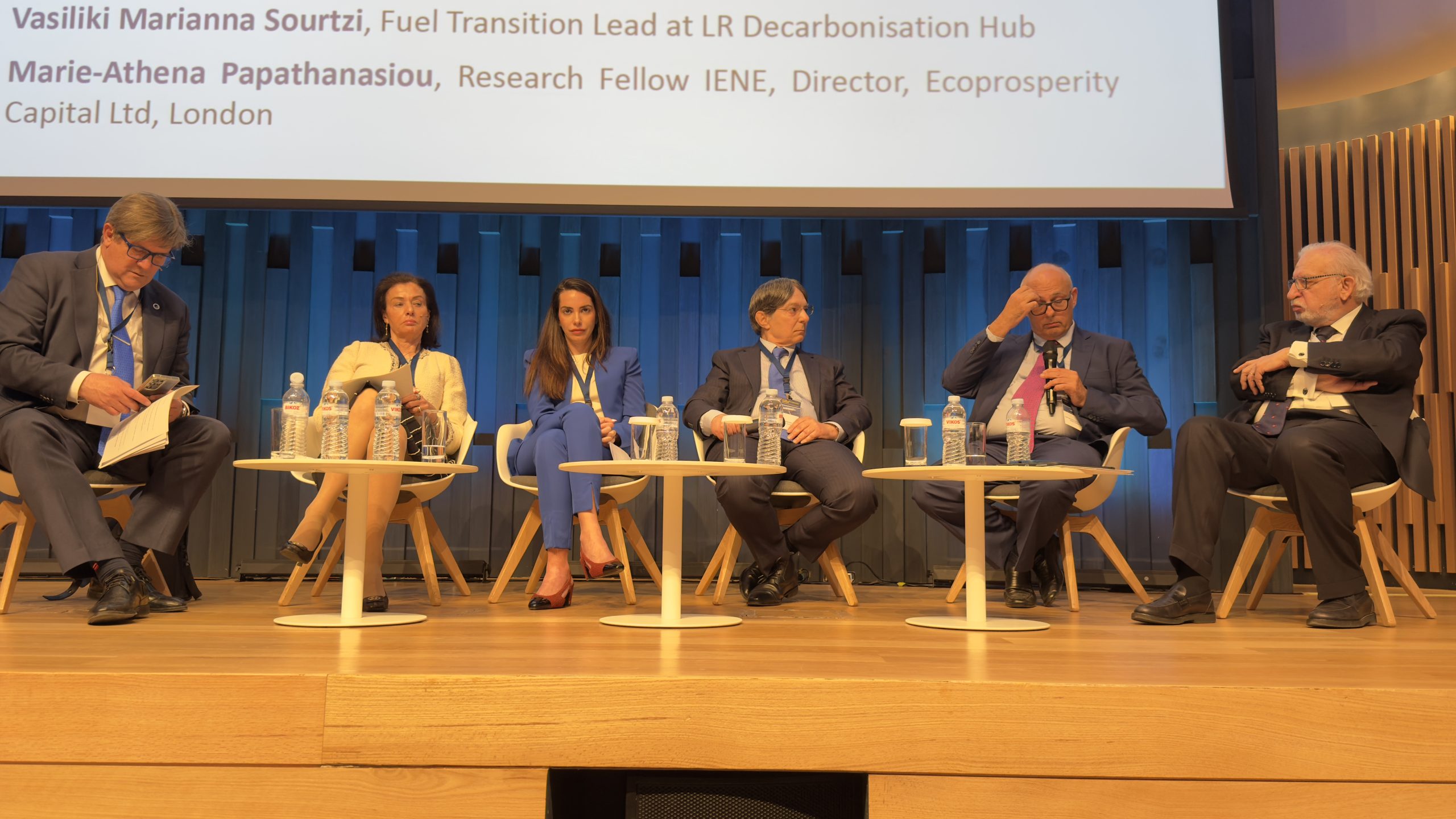
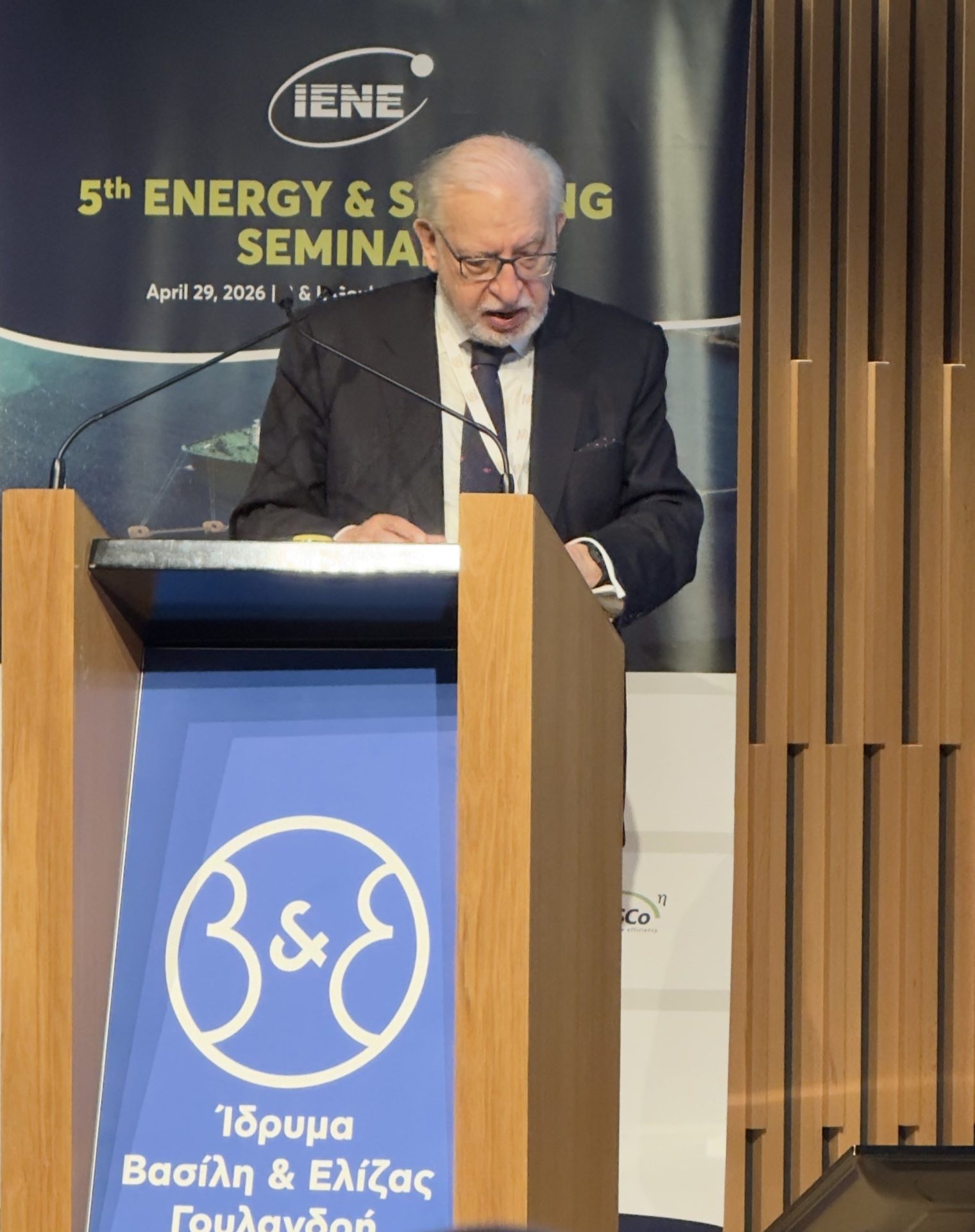
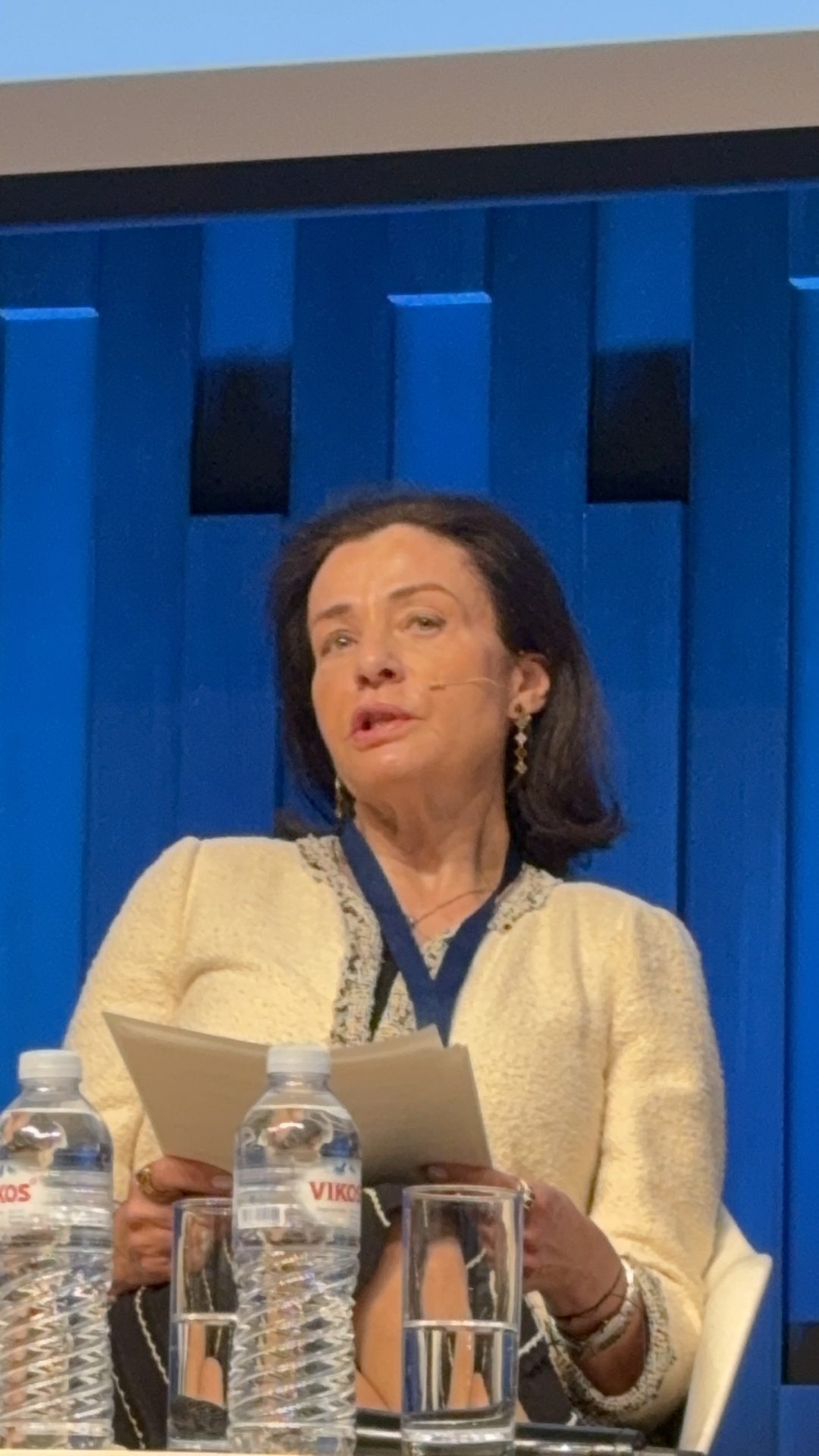
In the context of the seminar, the participation of two Corresponding Members of Komvos in the same panel was of particular significance for the organisation: Costis Stambolis, Chairman and Executive Director of IENE, and Marie-Athena Papathanasiou, Research Fellow at IENE and Director of Ecoprosperity Capital Ltd in London. The discussion highlighted the close connection between the decarbonisation of shipping and energy security, as well as the need to approach the transition with technical and economic realism. Particular emphasis was placed on the availability, cost and infrastructure of alternative fuels, and on the fact that the critical issue is no longer only the ordering of vessels capable of using new fuels, but the existence of reliable production, certification and bunkering supply chains. In the same context, the importance of new bunkering hubs was underlined, along with Greece’s potential strategic position on the Mediterranean routes of the new maritime energy landscape.
The Role of Komvos through the “Shipping & ESG” Initiative
Komvos actively follows these developments through its “Shipping & ESG” initiative, with particular emphasis on the green transition of coastal ferry services and short sea shipping.
The discussion at the 5th IENE Energy & Shipping Seminar confirms the need for a more realistic and coordinated approach. The transition cannot rely only on general declarations. It requires technical documentation, economic viability, regulatory clarity, port planning, educational infrastructure and cooperation between the public and private sectors.
In this field, Komvos can function as a platform for dialogue and action. It can contribute to connecting Greek maritime experience with international expertise, highlighting pilot applications, shaping policy proposals and creating synergies between businesses, scientific institutions, public bodies and members of the diaspora.
The new maritime reality is not only about which fuel will prevail. It concerns how infrastructure will be organised, how investment risk will be reduced, how human capital will be trained, how energy security will be strengthened and how Greece will leverage its maritime strength in a changing energy and geopolitical environment.
The transition will be long, complex and demanding. This is precisely why serious preparation, evidence-based dialogue and strategic partnerships are needed from now.