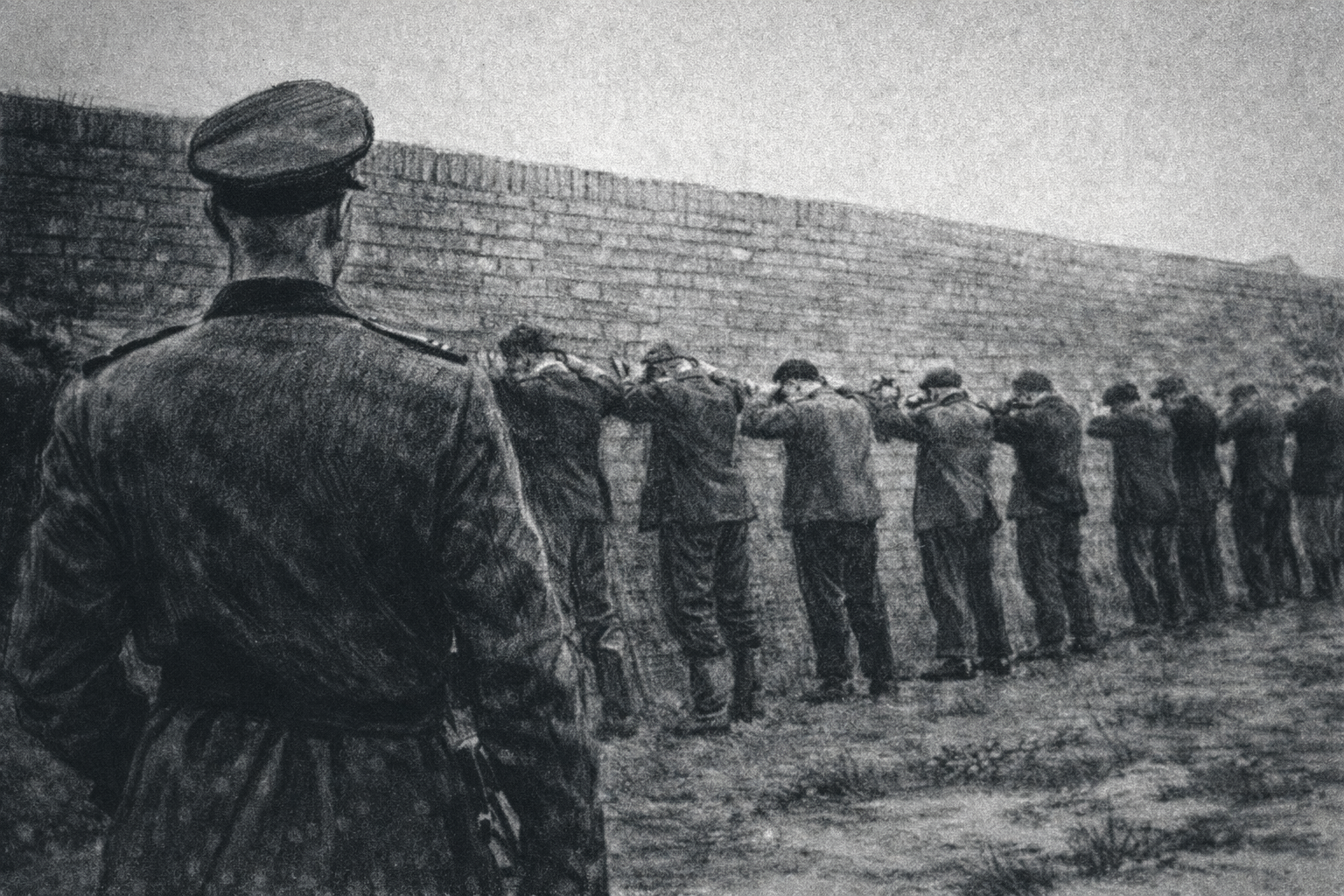
A modern approach to the power and limits of photography as a historical document
In an era where images dominate public discourse and shape perceptions, the need for a critical approach to photographic testimony is more relevant than ever.
On the occasion of the recent article by historian Christina Koulouri, Rector of Panteion University and Partner of Komvos – Networks of Global Hellenism, published in the B2 supplement of the newspaper To Vima, a fundamental question is brought to the forefront through a specific historical example: the photographs of the execution of the 200 in Kaisariani on May 1, 1944.
These photographs have recently returned to public attention following the disclosure and acquisition by the Greek State of the so-called Hoyer Collection, an important archive from the period of the Occupation that includes numerous photographic and documentary materials. The emergence of this material concerns not only its historical value, but also the way it is reintroduced into the public sphere.
This case highlights a critical question: to what extent photographs constitute an “objective” representation of reality, or whether they are instead interpreted through the context and intentions of both the time in which they were produced and the time in which they are revisited.
Photography, although often perceived as indisputable evidence, is never neutral. The choice of framing, moment, and perspective, as well as the conditions under which an image was captured and disseminated, decisively shape its meaning. In the case of Kaisariani, the historical and symbolic weight of the images makes the need for careful and well-documented interpretation even more pressing.
At the same time, the contemporary use of such photographs—especially when detached from their original context—can lead to simplifications or even the instrumentalization of historical memory. Images do not “speak” on their own; they require interpretation, knowledge, and methodological rigor.
Christina Koulouri’s article underscores precisely this need: to approach visual evidence not as self-evident proof, but as historical sources embedded within broader frameworks of meaning and use.
At a time of intense public debate, where visual material is often used to reinforce arguments or shape impressions, such contributions are essential. They remind us that historical memory is not merely a matter of preserving images, but above all a matter of understanding them.
The full article by Christina Koulouri was published in the B2 supplement of To Vima (March 15, 2026) and constitutes an important contribution to the public dialogue on the role of images in contemporary society.