You are currently viewing Adrianos Golemis and Greece’s Path towards Space

Adrianos Golemis and Greece’s Path towards Space

The First Greek Mission to the ISS and the Challenge of Greece’s Presence in Space

For many years, space was something Greece mainly observed from a distance: a story from NASA, the Soviet Union or, later, ESA; a chapter in a physics textbook; a fascinating but distant field. A Greek presence did exist, but it was expressed primarily through Greeks of the diaspora working in the space agencies of other countries, in research centres and in universities abroad. In recent years, however, Greece’s relationship with space has begun to acquire more concrete substance within the country itself: satellite applications, research programmes, technology companies, educational initiatives and participation in the European space ecosystem.

The announcement by Prime Minister Kyriakos Mitsotakis on Friday, 26 June 2026, at the event “Greece In Orbit”, organised by the Ministry of Digital Governance and Artificial Intelligence at the Hellenic Cosmos Cultural Centre of the Foundation of the Hellenic World, gave this discussion a new focal point. It had been preceded, on Thursday, 25 June, by a meeting at the Maximos Mansion, chaired by the Prime Minister, on the planning of the first mission by a Greek astronaut to the International Space Station. The event presented the first comprehensive National Space Plan and the new National Space Programme “HELLAS–SPACE 2.0”, with a budget of approximately €350 million and funding from the Recovery and Resilience Facility. At the centre is Adrianos Golemis, a space mission physician, ESA astronaut trainee and Corresponding Member of Komvos. His path, from medicine and Antarctica to the European astronaut training programme, connects individual scientific expertise with a broader question: how Greece can acquire a more active role in the contemporary space ecosystem.

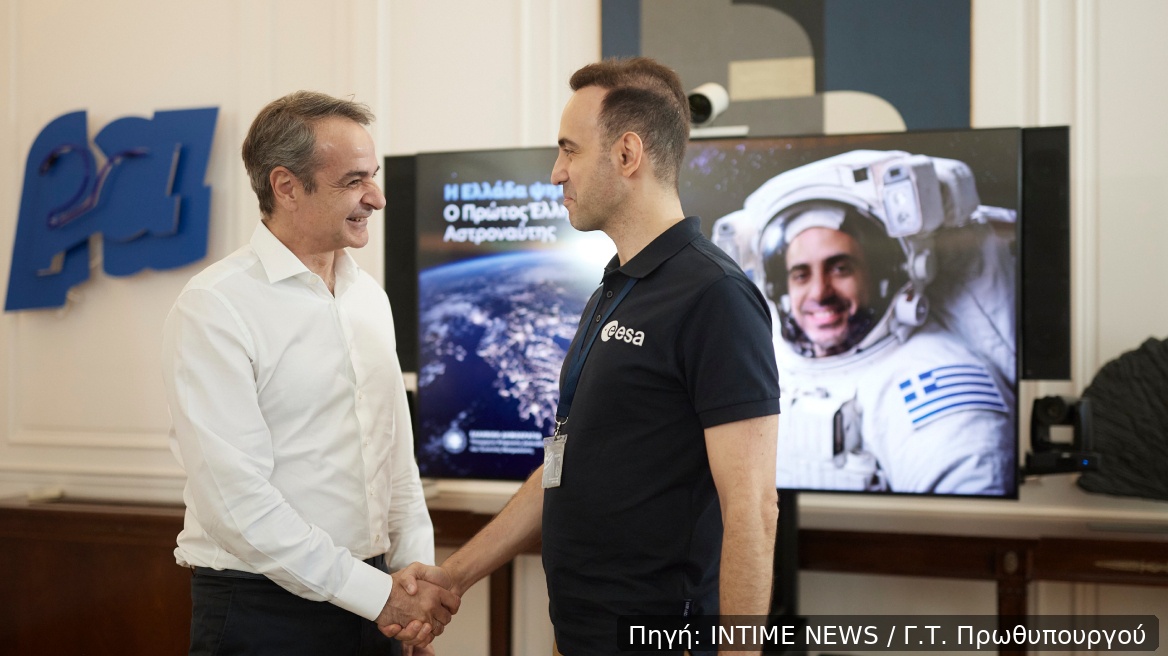
Prime Minister Kyriakos Mitsotakis with Adrianos Golemis

The mission acquires particular significance for what it can mobilise around it: Greek research teams, technological applications, educational initiatives and a more systematic connection between the country and European space activity. A central objective is to enable research from Greece to be carried out in microgravity conditions, using the International Space Station as a laboratory for experiments, tests and technological applications. In this context, the case of Adrianos Golemis serves as a starting point for a broader discussion about Greece’s presence in space, science and the ability of a new generation to take part in fields of advanced knowledge and international collaboration.

From Medicine to Space

Adrianos Golemis was born and raised in Larissa. He studied medicine at the Aristotle University of Thessaloniki and later turned to space medicine, a field that stands behind every crewed mission, usually away from the public spotlight. In space, the human body has to function in conditions of microgravity, with changes affecting balance, muscles, bones, sleep and everyday physiology. The work of space mission physicians is to prepare astronauts, monitor them during the mission and support them on their return to Earth.

Antarctica was a critical point in Adrianos Golemis’ path. He lived and worked at the Concordia research station, one of the most isolated stations on the planet, where conditions are used as a terrestrial analogue for the study of long-duration space missions. The cold, isolation, restricted daily routine and long-term cohabitation of a small team allow researchers to study physical and psychological responses that are directly relevant to space research. Before that, he had completed postgraduate studies in Space Studies at the International Space University in France, gradually building expertise at the intersection of medicine, physiology and extreme living conditions.
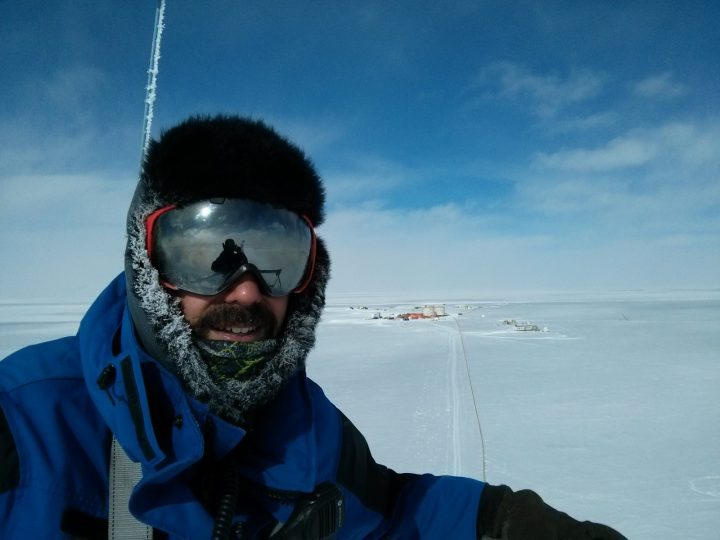
Since 2018, he has been involved in the medical support of European ESA astronauts, focusing on their preparation, monitoring and return after missions. In 2022, he took part in ESA’s major selection process for new astronauts, alongside more than 22,500 candidates from across Europe, and reached the top 0.1%. In 2026, he became the first Greek citizen to begin astronaut training at ESA’s European Astronaut Centre in Cologne. His path reflects a Greek presence in space built through systematic scientific work, international experience and participation in one of Europe’s most demanding institutional frameworks.

What a Greek Mission to the ISS Means

The International Space Station is one of the most complex examples of international scientific cooperation. Orbiting the Earth, it operates as a microgravity laboratory, where ideas, materials, technologies and biological processes are tested in conditions that cannot be reproduced in the same way on the ground. The research carried out there covers fields such as medicine, physics, biology, materials science, Earth observation and the development of new technological applications.
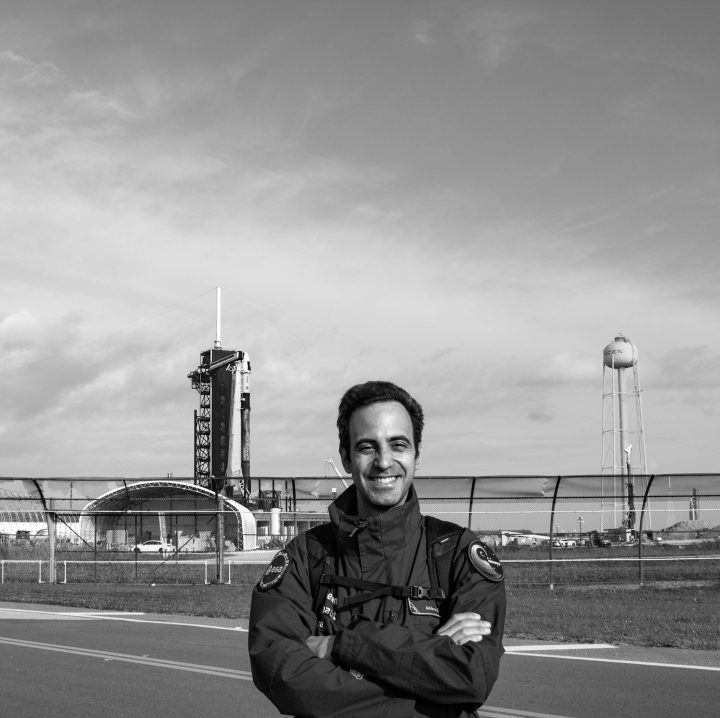
Greek participation in a mission to the ISS would have a strong symbolic dimension, as it would connect the country with crewed space activity in a direct and visible way. Its substantive value, however, lies in the scientific and technological content that could accompany it. If the mission includes experiments, tests or technology demonstrations developed by Greek universities, research centres, institutions and companies, it could serve as an international platform for the Greek ecosystem of knowledge and innovation.

The possibility of designing an experiment or application in Greece and testing it under space mission conditions creates a different level of credibility, experience and networking. It brings Greek teams into contact with demanding procedures, international standards, specialised data and high-level collaborations. The significance of such a mission therefore extends beyond the flight itself, into fields that return to Earth: telecommunications, shipping, civil protection, climate monitoring, defence, education and technological development.
The Educational Value of the Mission

The educational dimension of a Greek mission to the International Space Station is of particular interest. The plan that has been presented includes activities for students, such as a satellite-building competition, STEM competitions and the opportunity to send questions to astronauts serving on the ISS. These initiatives can bring space closer to the classroom through activities with a practical and research-oriented character.

The value of these activities lies in bringing students into contact with real questions of science and technology. Building a small satellite system, taking part in STEM competitions or formulating questions for people working in orbital conditions gives learning more concrete content. Space becomes a point of entry into physics, mathematics, engineering, computer science, collaboration and problem-solving.

For Greece, this educational dimension can serve as a continuation of the mission itself. It connects the event with the younger generation, provides material for schools and teachers, and creates a field in which science is presented through applications, experience and participation. In this way, the mission can continue to have educational value even after the crew returns to Earth.

Komvos’ Space Initiative

Komvos has launched the initiative “Space Science, Technology and Industry”, with the aim of highlighting Greece’s potential within the space ecosystem and creating meeting points between scientists, research teams, institutions and businesses connected with this field.

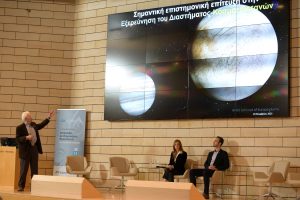
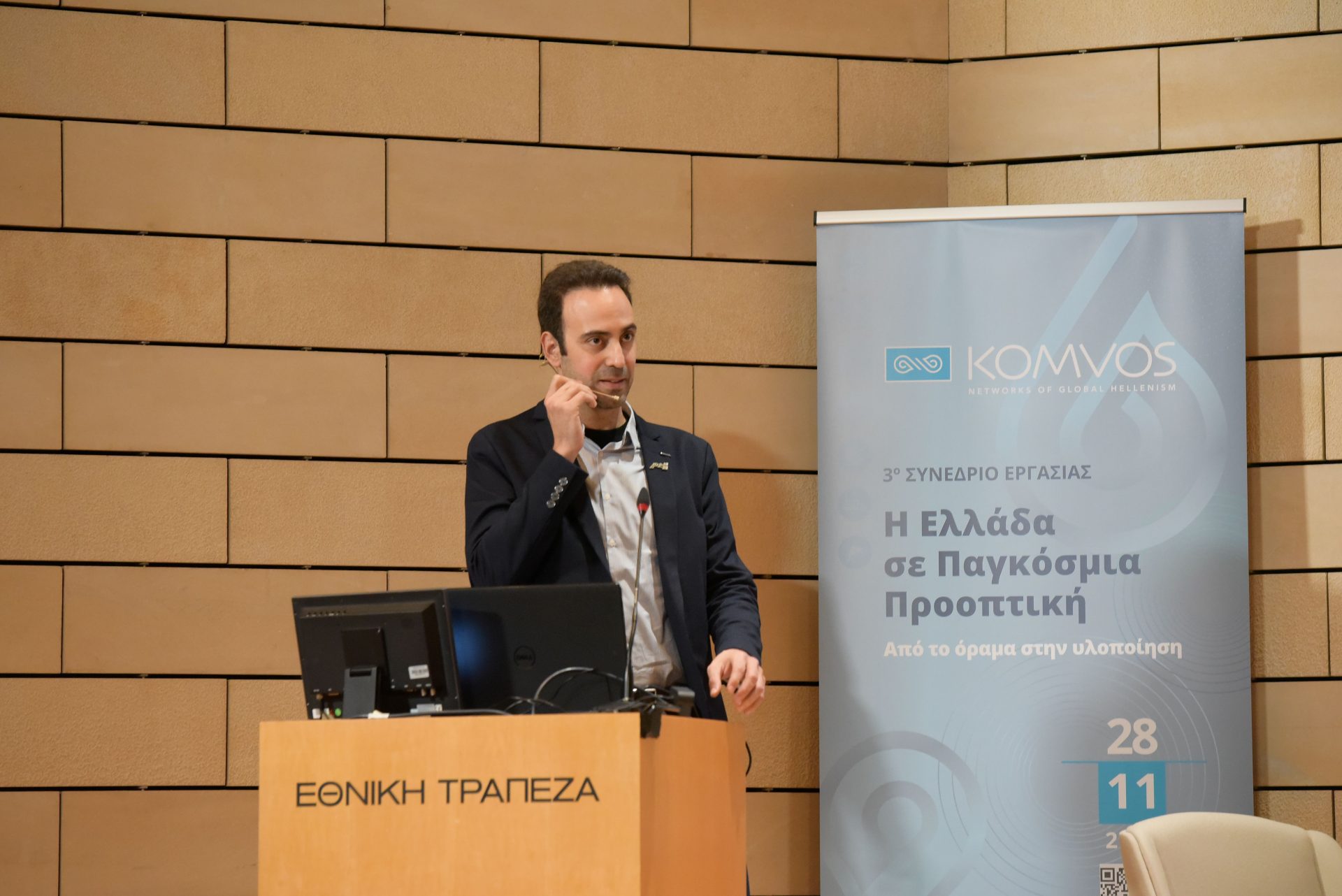
Ο Αδριανός Γολέμης σε παρουσίασή του στο 3ο Συνέδριο Εργασίας του Κόμβου
Adrianos Golemis at the 3rd Komvos Working Conference
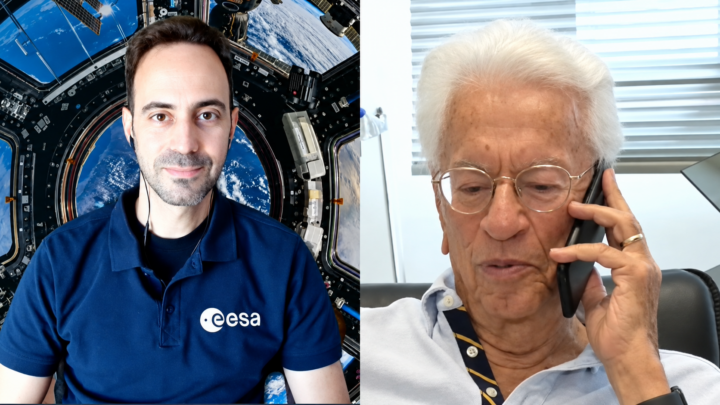
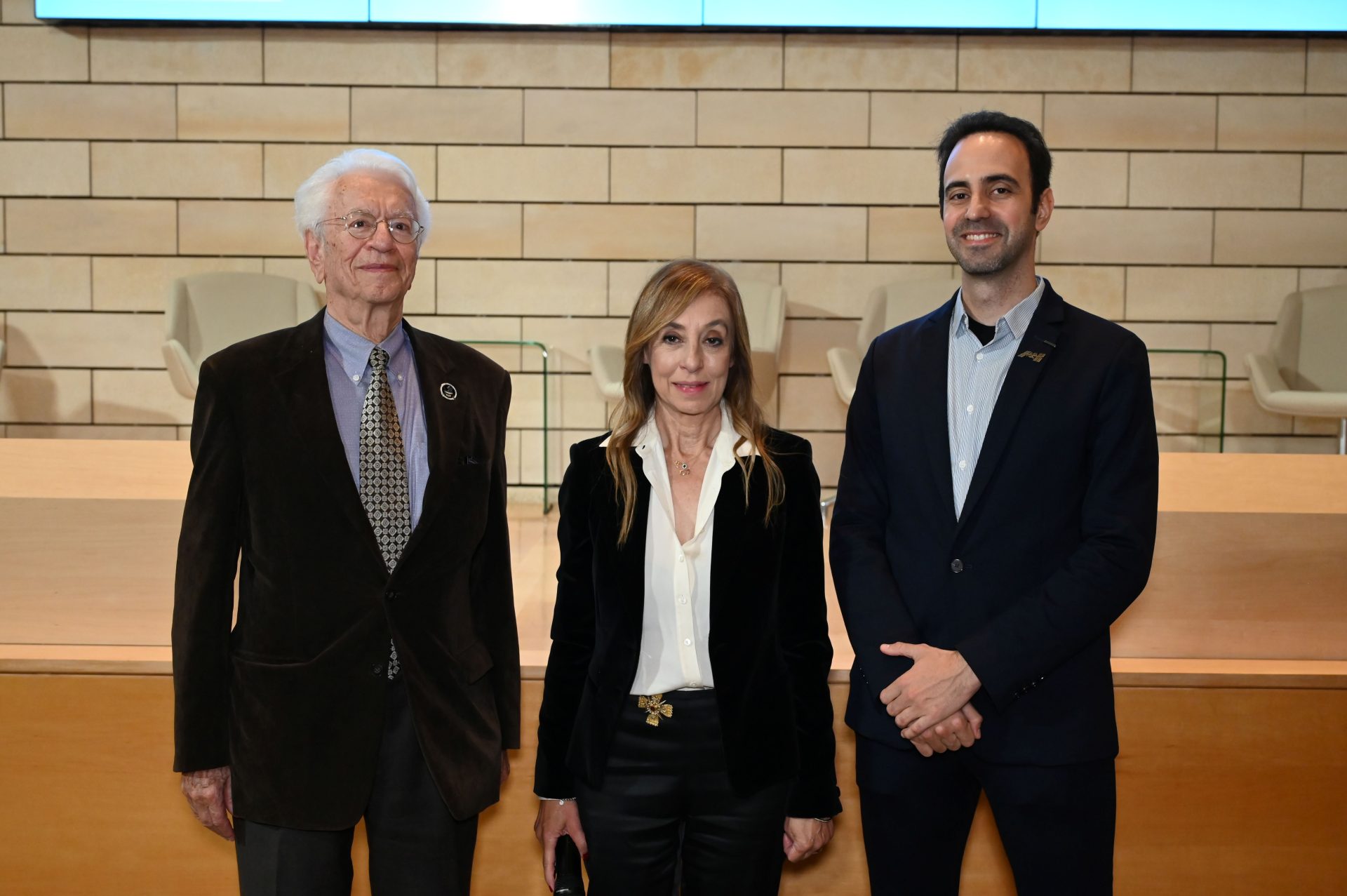
Stamatios Krimigis, Anna Grimani and Adrianos Golemis at the 3rd Komvos Working Conference

The initiative serves a broader goal of Komvos: connecting Greece with people of Global Hellenism who work in fields of knowledge, technology and international cooperation. In space, this connection acquires concrete substance, as it relates to applications in research, education, industry, Earth observation and technologies already used in everyday life.

This is also the context for Komvos’ relationship with Adrianos Golemis. His path, from the medical support of ESA astronauts to his training as an astronaut, gives the initiative a tangible example of Greek presence in a demanding international field.

A New Image of Greece in Space

The prospect of a Greek mission to the International Space Station opens up a broader discussion about the country’s position in science, technology and the space industry. For years, the public debate around Greek research was mainly associated with brain drain, the departure of young scientists and the weaknesses of the domestic system. Alongside that reality, however, there is another: Greek scientists with international careers, research teams participating in European programmes and technology companies that can become part of highly specialised value chains.

Space is one of the fields where this potential acquires concrete substance. It requires precision, reliability, cooperation, expertise and stable planning. Participation in space programmes, from satellite applications to crewed activity, can serve as a field of testing and visibility for the Greek scientific and technological community.

A possible mission to the ISS can become an opportunity for a more organised discussion around Greece’s presence in the space ecosystem. The objective is practical: a better connection between research, education, technology and Greeks already working in highly specialised international fields. This is where Komvos’ space initiative can contribute, by creating contacts, partnerships and greater public visibility around a field that now concerns much more than spaceflight itself.

Read more about Komvos’ Space Initiative here.