You are currently viewing Adrianos Golemis on Greece’s First Crewed Mission to Space

Adrianos Golemis on Greece’s First Crewed Mission to Space

A Journey of People, Science and Collaboration

The ESA–Vast agreement on behalf of Greece, the planned 2027 mission to the International Space Station, Adrianos Golemis’s preparation, and Greece’s space science and technology ecosystem.

The Announcement in Paris and Greece’s First Crewed Space Mission

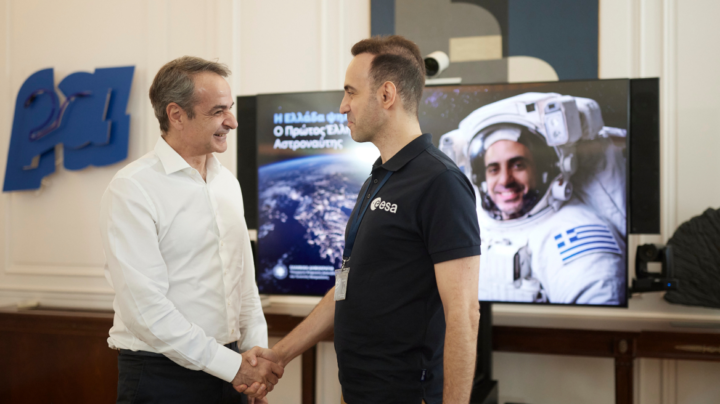
On 26 June 2026, Prime Minister Kyriakos Mitsotakis announced that Adrianos Golemis, a Corresponding Member of Komvos, would become the first Greek to take part in a space mission, marking a new phase in Greece’s presence in human space exploration. That announcement carried strong symbolic significance, while also signalling a process that, over the following months, would acquire a clear institutional, operational and technical framework.
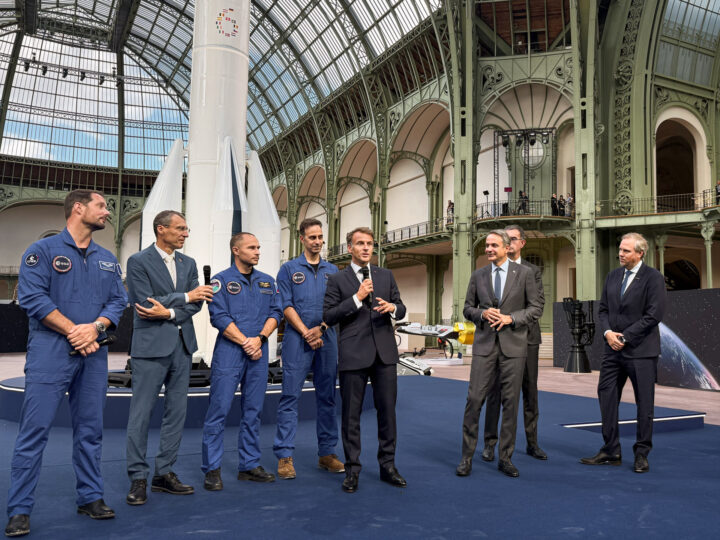
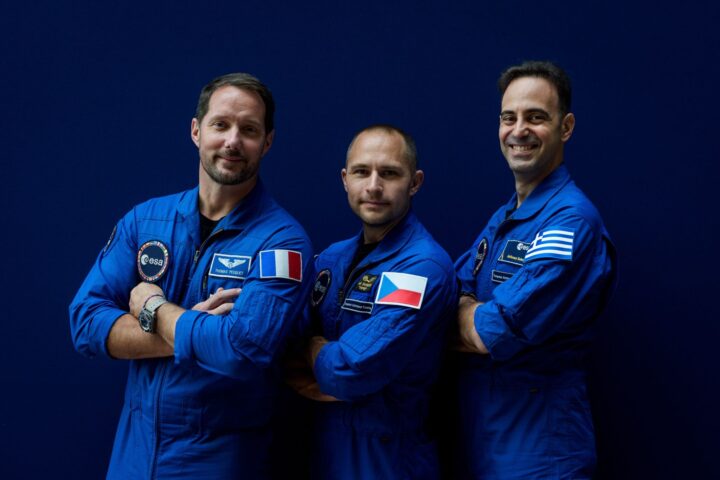
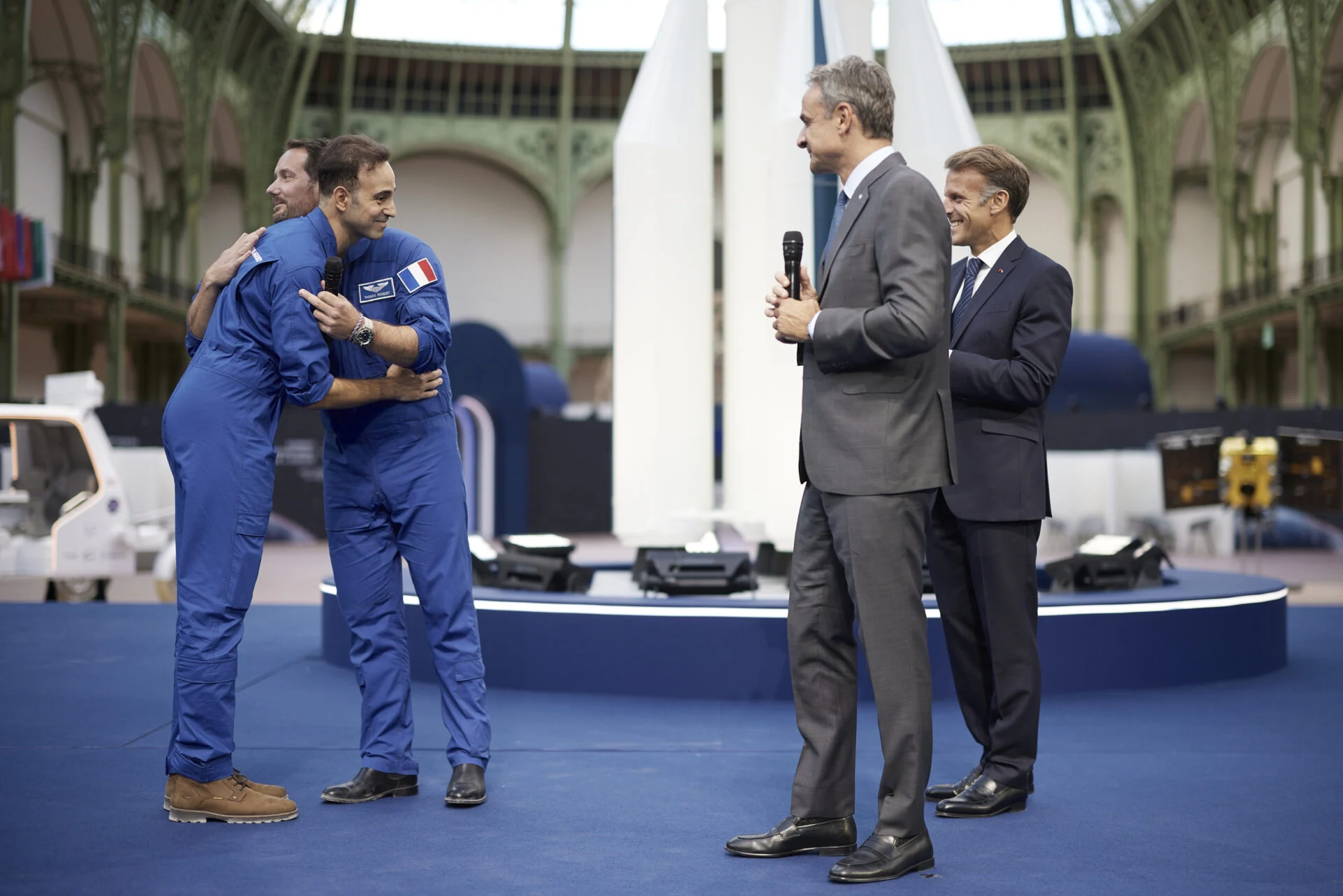
That process took concrete form on 9 September 2026 at the Grand Palais in Paris, during the International Space Summit. The European Space Agency announced the signing of an agreement with Vast, on behalf of Greece, for the country’s participation in a crewed mission to the International Space Station. The agreement established the specific framework for Greece’s participation, including the organisations involved, the technical means to be used and the principal members of the mission.


According to the ESA announcement, Adrianos Golemis has been designated as Mission Specialist, while the final crew composition will follow the established approval procedures of the Multilateral Crew Operations Panel, the body representing the partners of the International Space Station. The mission is planned for 2027 and is expected to be carried out aboard a SpaceX Dragon spacecraft, launched by a Falcon 9 rocket. The crew announced so far also includes French ESA astronaut Thomas Pesquet as Commander and Czech astronaut Aleš Svoboda as Pilot, while the fourth crew member is expected to be announced at a later stage.

With these elements now in place, the June announcement has evolved into a concrete mission plan with a defined timeline, crew and operational framework.

 Adrianos Golemis’s Journey to Space

Adrianos Golemis’s participation in the mission builds on a long-standing scientific and professional career in space medicine and human space exploration.

Adrianos Golemis studied Medicine at Aristotle University of Thessaloniki and continued his studies in Space Sciences at the International Space University in Strasbourg. Over the course of his professional career, he has worked as a flight surgeon for ESA and has gained experience in areas related to human physiology, astronaut medical support and the operation of human crews in extreme environments.

A particularly significant stage in Adrianos Golemis’s career was his participation in a mission to Antarctica, where he worked in conditions of prolonged isolation and extreme environmental stress. Such missions provide valuable data for understanding human adaptation to conditions that bear important similarities to the demands of long-duration spaceflight.

Following the announcement in Paris, Adrianos Golemis is entering a more specialised phase of training for the mission. His preparation includes activities in Europe and the United States, involving ESA, Vast, SpaceX and NASA, and covers spacecraft systems, emergency procedures, spacesuit operations, operational protocols and mission simulations.

The Scientific Dimension of Greece’s Participation

Adrianos Golemis’ presence aboard the International Space Station is particularly significant in light of the mission’s scientific programme. ESA and the Greek side are working on the preparation of scientific payloads and educational activities that could be carried out during the mission.

For decades, the International Space Station has served as one of the world’s most important research laboratories in microgravity. Experiments in biology, medicine, materials science, energy and human physiology have contributed both to the preparation of future space missions and to the development of technologies with applications on Earth.

The inclusion of Greek experiments therefore gives the mission an additional layer of significance. Greece’s participation can be directly connected with research teams, universities, technology companies and scientific fields that are already developing within the country.

Greece’s Space Research and Exploration Ecosystem

Greece’s presence in space has gradually developed into a complex ecosystem involving universities, research centres, public institutions, businesses and scientists with international activity. Greece’s participation in ESA has provided the institutional and collaborative framework for the development of initiatives across a broad range of fields, from planetary exploration and human spaceflight to satellite telecommunications and Earth observation.

Today, alongside the national microsatellite programme and the contribution of Greek scientists across a wide range of space-related fields, Greek teams are active in space medicine, the study of the effects of radiation on the human body, research under microgravity conditions, robotic exploration systems, energy technologies and the development of systems for future missions to the Moon and other celestial bodies. This broader scientific community also includes Komvos Partners with a long-standing international presence in the field: Academician Stamatios Krimigis, Emeritus Head of the Space Department at the Johns Hopkins University Applied Physics Laboratory and one of the most prominent international figures in space exploration; astrophysicist and planetary scientist Athena Coustenis, Director of Research at CNRS and researcher at Observatoire de Paris–PSL, with many years of participation in ESA and NASA missions; astrophysicist Chryssa Kouveliotou, Professor Emerita of Physics at George Washington University, with a long career at NASA and internationally recognised work in high-energy astrophysics; Amedeo Odoni, Professor Emeritus and holder of the T. Wilson Chair at MIT, with academic appointments in the Departments of Aeronautics and Astronautics and Civil and Environmental Engineering, as well as Corresponding Member Manolis Pleionis, Professor in the Department of Physics at Aristotle University of Thessaloniki and former Director and Chairman of the Board of the National Observatory of Athens. Also active within this environment is Anezina Solomonidou, a planetary scientist and Scientific Officer at the Hellenic Space Center and a member of Komvos’ International Advisory Committee, who is involved in the scientific preparation of international planetary exploration missions and has contributed, among other projects, to ESA’s JUICE mission to the Jupiter system.
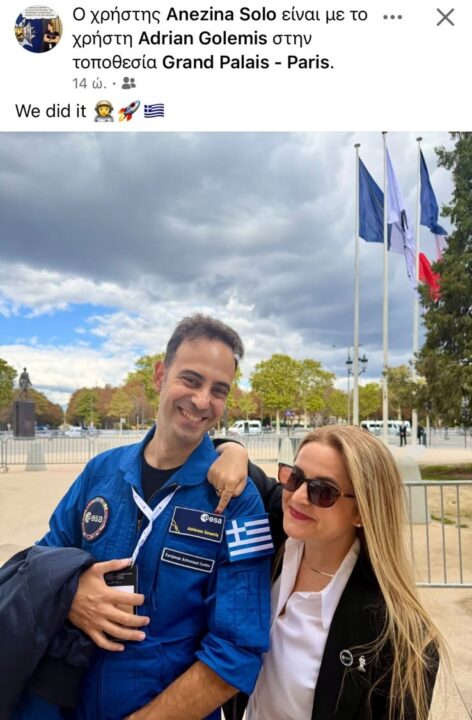
 

Anezina Solomonidou’s presence in Paris alongside Adrianos Golemis on the day of the announcement naturally reflects the collective dimension of this journey. Their photograph together serves almost as a commentary on an effort shaped through scientific work, institutional participation and long-standing collaboration.

Komvos is also part of this broader ecosystem, having developed a dedicated initiative on Space Science and Industry, with an emphasis on showcasing Greece’s scientific and technological capabilities, strengthening networks and fostering collaboration among researchers, institutions, companies and the Greek diaspora.

The Paris Announcement at a Time of European Transformation
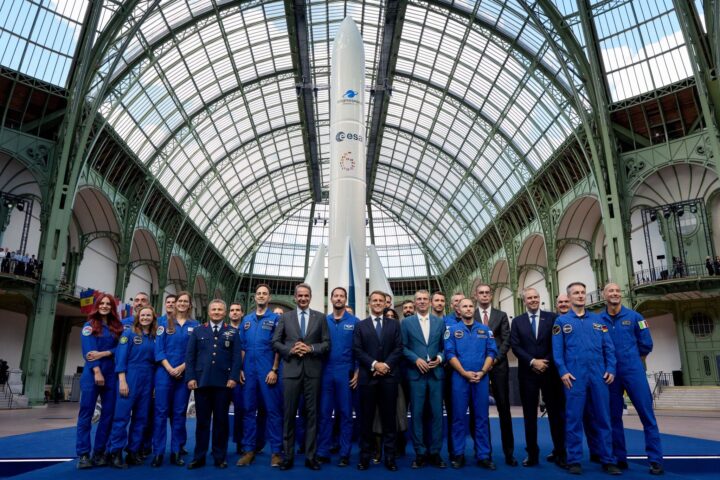
The International Space Summit in Paris took place at a particularly important moment for European space policy. Europe is reassessing its position in an environment in which access to space, satellite infrastructure, security, technological independence and human space exploration are acquiring growing strategic importance.

This discussion includes strengthening Europe’s autonomous access to launch capabilities, developing IRIS² for secure satellite communications, preserving critical technological capabilities within Europe, and defining the continent’s future role in human space exploration.

ESA now explicitly links space policy with Europe’s economic competitiveness, technological leadership, security and strategic autonomy. As a result, space is increasingly moving beyond a primarily scientific domain and becoming one of the key arenas in which the technological and geopolitical balances of the coming decades are being shaped.

Within this broader context, Greece’s participation in a crewed mission to the International Space Station takes on wider significance. Greece is already involved in European space activities through ESA, the Hellenic Space Center, universities, research teams and companies. The 2027 mission offers a highly visible expression of that participation and creates an opportunity to connect public interest in the first Greek astronaut with the scientific, technological and educational dimensions of space.

A Mission with Broader Significance for Greece

Adrianos Golemis’s participation in the 2027 mission is undoubtedly a personal achievement of particular symbolic significance for Greece. At the same time, the importance of the mission extends beyond the individual who is preparing to become the first Greek to travel to the International Space Station.
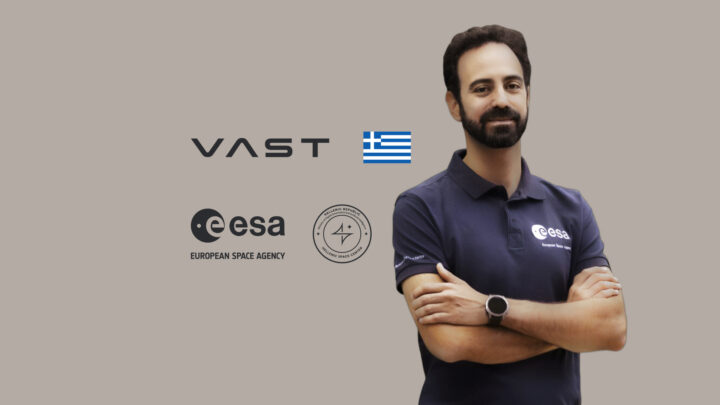

The path to this point has involved scientists, research teams, public institutions, universities, companies and international collaborations that have contributed over many years to the gradual strengthening of Greece’s presence in space. The mission’s scientific component, the development of the domestic ecosystem and the opportunity to inspire more young people to pursue science and technology may ultimately prove just as important as the flight itself.
 

The image of Adrianos Golemis and Anezina Solomonidou in Paris offers, in its own spontaneous way, an accurate summary of this reality. A Greek astronaut is preparing to travel to the International Space Station, supported by an increasingly mature network of people, knowledge, institutions and collaborations.