Shipping, Ports and the Green Transition at the Athens Meeting
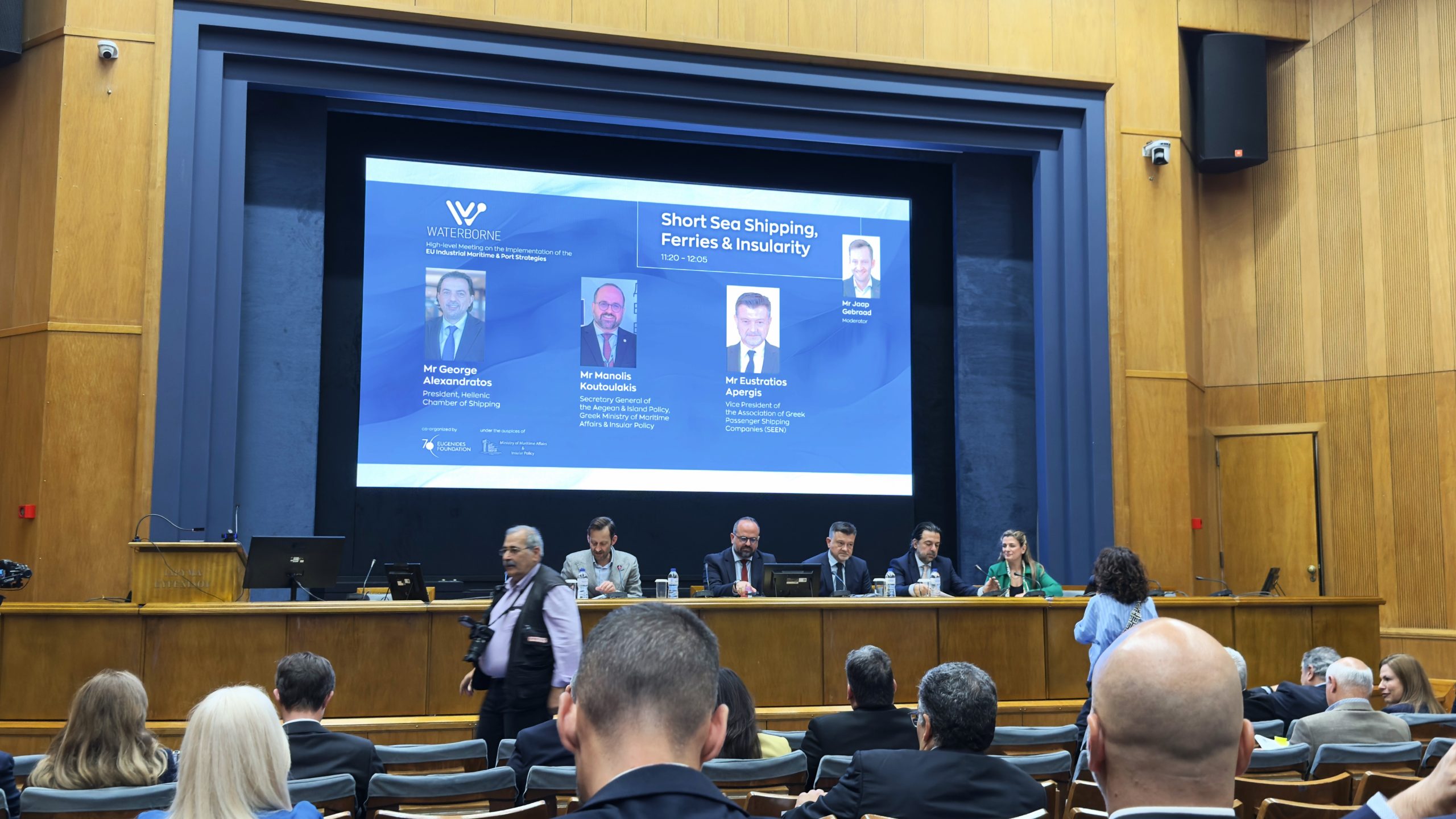
The green transition of European shipping, the upgrading of port ecosystems, maritime technology and the skills required for the new era were at the centre of the high-level meeting of the Waterborne Technology Platform, held on 30 April 2026 at the Eugenides Foundation in Athens.
The event focused on the implementation of the European Strategy for the Maritime Industry and the European Ports Strategy, bringing together representatives from shipping, coastal ferry services, shipbuilding, ports, research, technology and policymaking. It was organised by the Waterborne Technology Platform, in cooperation with the Eugenides Foundation and under the auspices of the Ministry of Maritime Affairs and Insular Policy.
Keynote addresses were delivered by the Minister of Maritime Affairs and Insular Policy, Vassilis Kikilias, and the European Commissioner for Sustainable Transport and Tourism, Apostolos Tzitzikostas, highlighting the strategic importance of the discussion for both Greece and Europe.
In brief: the meeting underlined that the green transition of European shipping requires coordination between ships, ports, technology, financing and skills, with particular emphasis on coastal ferry services, short sea shipping and insularity.
Short Sea Shipping as Critical European Infrastructure
Particular emphasis was placed on short sea shipping, passenger vessels and insularity. The relevant session highlighted that coastal ferry services are not merely a distinct segment of transport, but critical infrastructure for social cohesion, economic activity and territorial continuity.
For countries such as Greece, maritime connections function as lifelines for the islands, transporting people, goods, energy, medicines and essential services. From this perspective, the green transition of coastal ferry services cannot be treated solely as a technological or environmental challenge. It is also an issue of insularity, social resilience, regional development and European cohesion.
The discussion also highlighted the need for European strategies to be connected with the specific reality of islands and coastal regions. Islands are not merely seasonal tourist destinations, but year-round active communities with economic, social and geopolitical roles.
Realistic Transition, Financing and Technological Choices
A significant part of the discussion focused on the need for a realistic approach to the decarbonisation of shipping. The interventions highlighted that fleet renewal, the adaptation of existing vessels, electrification where technically feasible, the use of transitional fuels and the development of appropriate port infrastructure must move forward in a coordinated manner.
The green transition cannot rely exclusively on private investment, particularly in an environment of increased shipbuilding costs, technological uncertainty and limited availability of new fuels at commercial scale. For this reason, the need was stressed for targeted European financing tools, effective use of available resources and mechanisms that return to the sector part of the funds it contributes towards the green transition.
The core position that emerged was that decarbonisation must proceed through specific, applicable and economically viable solutions. The technological choices made today will affect the fleet, infrastructure and competitiveness of European shipping for decades to come.
Ports, Technology and Skills in the Green Transition
Ports emerged as critical nodes of the transition. They are not merely points of berthing or transshipment, but infrastructures of resilience, safety, energy transition and regional development. Especially in island regions, ports are directly connected with the daily functioning of the economy, energy security, connectivity and the quality of life of local communities.
The discussion on port ecosystems highlighted the need for synchronisation between ships, infrastructure, energy supply, the regulatory framework and financing tools. The transition to new fuels or electrification cannot succeed without suitable port facilities, energy infrastructure and a clear implementation framework.
At the same time, the issue of skills held a prominent place. Shipping in the new era will require officers, engineers, technicians, port executives and professionals with new knowledge and capabilities. Education and training are therefore an integral part of the green and digital transition of shipping.
The Participation of Individuals and Organisations from the Komvos Network
The event included the participation of individuals and organisations connected with the network of Komvos.
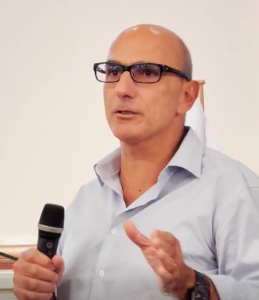
Dr Sotiris Theofanis, Partner of Komvos and member of the Advisory Committee of the “Shipping & ESG” initiative, moderated the thematic session on port ecosystems. Dr Maria Boile, Corresponding Member of Komvos and also a member of the Advisory Committee of the “Shipping & ESG” initiative, moderated the thematic session on skills, education and quality jobs. Dr Eleni Polychronopoulou, President of HEMEXPO and Executive Vice President of ERMA FIRST, a Corporate Member of Komvos, participated in the session on the maritime technology sector.
Their presence highlights the connection of Komvos with key actors and organisations in the Greek and European maritime community. At the same time, it confirms the significance of the “Shipping & ESG” initiative as a field of dialogue, documentation and proposal development for the sustainable transition of shipping.
The contribution of people from the Komvos network to themes such as ports, skills and maritime technology underlines the need for a holistic approach. The green transition is not limited to ships. It includes infrastructure, industry, human capital, innovation, financing and institutional coordination.
Greece as a Field of Applied Maritime Innovation
One of the key conclusions of the meeting was that Europe needs to turn its maritime policy from a framework of ambitions into a practical implementation mechanism. This requires clear technological choices, appropriate financing tools, the return of resources to the sector that is called upon to invest in the transition, as well as the strengthening of Europe’s shipbuilding and technological base.
For Greece, this challenge is of particular importance. The country has an extensive network of island routes, significant coastal ferry activity, a strong maritime tradition and growing interest in technological solutions that can be applied in real operating conditions.
In this sense, Greece can function not merely as a testing ground, but as a living laboratory of applied innovation for the green transition of coastal ferry services, short sea shipping and port ecosystems.
In this context, Komvos actively follows European developments and seeks to contribute to the formation of an evidence-based dialogue on the sustainable transition of shipping, with particular emphasis on the needs of Greek coastal ferry services, insularity and broader European competitiveness.
Key Points from the Discussion
The meeting of the Waterborne Technology Platform in Athens highlighted five key priorities.
First, short sea shipping and coastal ferry services constitute critical European infrastructure, especially for island and coastal regions.
Second, the green transition of shipping requires realistic financing tools and technological choices that can be implemented in practice.
Third, ports are nodes of resilience, safety, energy transition and regional development.
Fourth, Europe’s shipbuilding and technological base must be strengthened, so that the green transition is linked to European competitiveness.
Fifth, skills, education and quality jobs are a basic condition for the sustainable transition of shipping.