The Professor of Hydrology and Komvos Partner has been elected Fellow of the International Academy of Artificial Intelligence Sciences
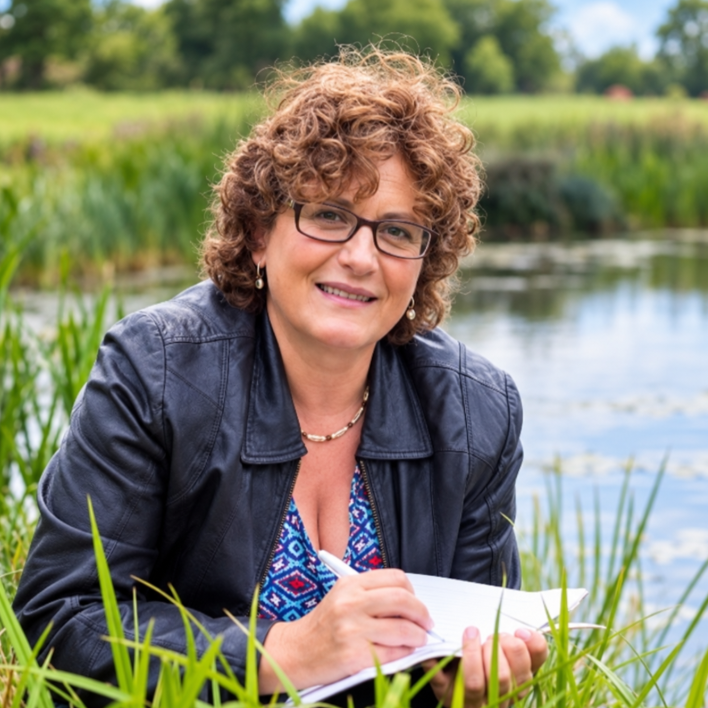
Georgia (Gia) Destouni, Professor of Hydrology and Water Resources at Stockholm University, Guest Professor at KTH Royal Institute of Technology and a Partner of Komvos, has been elected Fellow of the International Academy of Artificial Intelligence Sciences (AAIS), in recognition of her contribution to interdisciplinary applications of artificial intelligence.
The AAIS Fellowship recognises scientists who have made significant contributions to artificial intelligence, its technological applications and its use in addressing complex scientific and societal challenges.
The distinction was announced by KTH on 31 August 2026. Destouni’s research connects hydrology, water resources and environmental science with digital methods, including artificial intelligence and machine learning.
She attributes the distinction to the growing importance of combining AI and digital technologies with knowledge from environmental and Earth sciences.
Why is a hydrologist recognised in artificial intelligence?
The case of Georgia Destouni shows how artificial intelligence is increasingly moving into scientific fields beyond computer science. In hydrology, machine-learning tools are already used to analyse large volumes of data and predict changes in water systems.
Her research examines water flows, storage, availability and quality, as well as their interactions with climate, ecosystems and human activity. The field extends from local catchments to the global terrestrial water system.
Digital technologies make it possible to process complex datasets on drought, floods, pollution, changes in water availability and the consequences of climate change.
For Destouni, however, the objective is not to replace scientific knowledge with an algorithm. Artificial intelligence becomes valuable when it works alongside an understanding of the physical processes that determine how water behaves in the environment.
What is AI changing in water science?
This is precisely the question at the centre of a recent publication by Professor Destouni and Scott L. Painter in the scientific journal Water Resources Research.
The paper “Hydrology in the Age of Artificial Intelligence: From Fragmentation to Coherent Terrestrial Hydrosphere Science”, published on 30 January 2026, examines both the potential and the limitations of machine learning in hydrology.
The two researchers point out that machine-learning models have already achieved particularly strong results in predicting river flow. The central problem, according to their analysis, often lies in the fragmented way in which water systems themselves are studied.
Surface water, groundwater, ecosystems and human interventions are frequently examined separately, even though they are parts of a single interconnected system.
Painter and Destouni propose combining data-driven methods with models based on physical processes. In this way, AI can contribute to a more coherent understanding of the terrestrial water system and to more reliable decisions on its management.
Water, climate and an international scientific career
Destouni’s election to the AAIS adds to a series of international distinctions. She is a member of the Royal Swedish Academy of Sciences and the Royal Swedish Academy of Engineering Sciences, an International Member of the US National Academy of Engineering and a Corresponding Member of the Academy of Athens.
She is also a Fellow of the American Geophysical Union and Editor-in-Chief of the scientific journal Water Resources Research.
In 2022, she received a medal from the King of Sweden for her research on water and climate, while her previous distinctions include the Baltic Sea Award and the Henry Darcy Medal of the European Geosciences Union.
According to Stockholm University, her research spans regions including the Baltic, the Arctic, the Mediterranean, Africa, and Central and Eastern Asia, examining different aspects of the relationship between water, climate, ecosystems and society.
Georgia Destouni and Komvos
Georgia Destouni is a founding member and Partner of Komvos. Her scientific work lies at the intersection of two areas that Komvos follows systematically: technological innovation and the sustainable management of natural resources.
The use of artificial intelligence to understand water and climate change is a characteristic example of an interdisciplinary approach. Environmental science, technology and the management of critical natural resources converge around questions with direct consequences for economies and societies.
Georgia Destouni has previously contributed an article to The N Society column of Naftemporiki, as part of the Komvos initiative “Node of Ideas: Greece 2025–2040”, on water, climate change and Greece, highlighting the importance of scientific knowledge for the management of a natural resource under increasing pressure.
The new international distinction adds another dimension to this discussion: the role that AI and digital technologies can play in understanding and managing water systems in a changing world.