A recent CEPR presentation examines the perceptions shaping household investment decisions
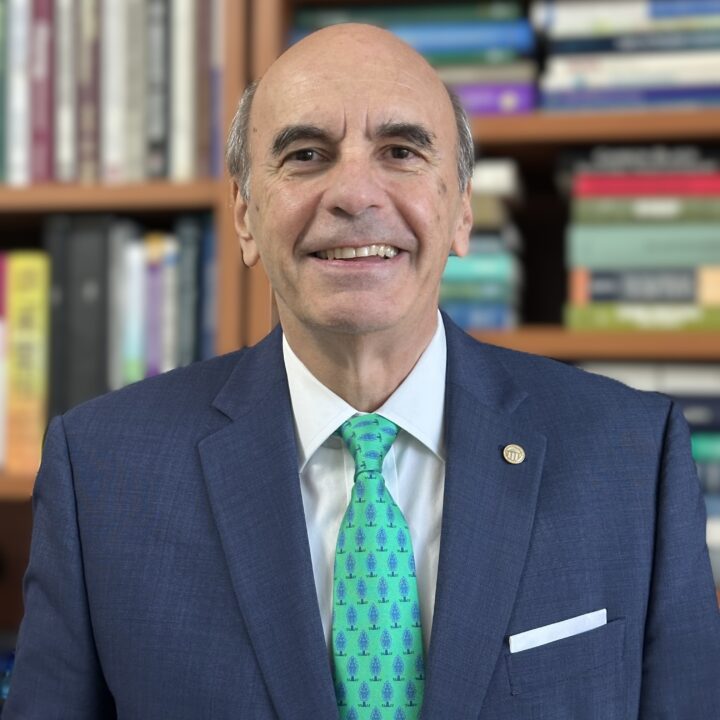
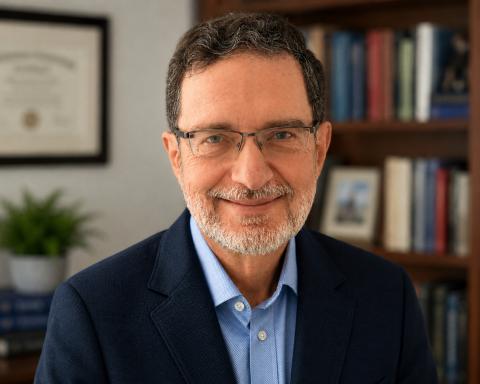
Michael Haliassos, Professor of Macroeconomics and Finance at Goethe University Frankfurt, Research Fellow at CEPR, founding director of the CEPR Network on Household Finance, President of the Board of Komvos and coordinator of the ENNOIA initiative, recently presented research addressing a persistent question: why do so many households stay away from the stock market?
Stock market participation refers to households owning and managing investments in shares or related financial products. Despite broader access to financial markets, a significant share of the population continues to remain outside them.
On 13 October 2026, Haliassos presented the study “Rethinking Stock Market Participation: A Qualitative Approach” at the CEPR Advanced Forum in Financial Economics. The paper is co-authored with Kamila Duraj, Daniela Grunow, Christine Laudenbach and Stephan Siegel.
Why do people avoid investing?
The study shows that staying out of the stock market cannot be explained solely by income, financial knowledge or tolerance for risk. An important role is also played by the way people themselves understand what investing requires.
The researchers find that many non-investors believe that participating in the market requires an ability to distinguish “good” from “bad” stocks, identify the right moments to buy and sell, and constantly monitor developments.
This perception makes investing appear far more demanding than it may be in practice.
For someone who believes that investing requires specialised knowledge, substantial time and an ability to predict market movements, the perceived cost of participation can seem high even before the first investment is made.
What did this research do differently?
The research team used a method widely employed in the social sciences but much less frequently in economics: open-ended, in-depth interviews.
They conducted 25 interviews with investors and non-investors in Germany, a high-income country where household participation in the stock market remains relatively low.
The interviews did not begin with questions about shares or investments. Participants were first invited to talk more generally about money, allowing perceptions, concerns and barriers to emerge without being predetermined by a conventional questionnaire.
The interviews were analysed using traditional qualitative methods and, as a complementary tool, large language models. The main findings were then tested in a representative survey of more than 7,000 people.
The perception of “active investing”
One of the study’s most interesting findings is that the belief that investing requires constant stock selection and market timing is not limited to people who remain outside the market.
A number of active investors also share the view that they need to monitor the market continuously, identify opportunities and avoid poor choices.
The difference is that some are able to overcome this perceived barrier with help from others. Family members, friends or a trusted financial adviser can reduce uncertainty and make entry into the market easier.
Social networks and trust therefore appear to matter more than traditional approaches focused exclusively on income, wealth or financial knowledge might suggest.
What do the findings mean for households?
The study does not argue that everyone should invest in the stock market. It highlights a different issue: financial decisions may be shaped by mistaken perceptions of how investing actually works.
If someone believes that market participation requires constant monitoring, picking individual stocks and predicting the right moment to act, they may dismiss investing from the outset as too difficult or too time-consuming.
For the researchers, this also has implications for financial education. Information does not need to focus only on concepts such as return, risk and diversification. It also needs to address basic misconceptions about what participation in financial markets actually involves.
The finding is particularly relevant at a time when digital platforms have significantly reduced the technical barriers to investing. Easier access does not necessarily mean that psychological and cognitive barriers have disappeared.
From research to financial resilience
Michael Haliassos has held the Chair of Macroeconomics and Finance at Goethe University Frankfurt since 2004. His research focuses on household finance, saving, investment decisions, financial literacy and the management of financial risk.
He is founding director of the CEPR Network on Household Finance and an adviser to the European Central Bank on the Household Finance and Consumption Survey. In 2025, he was elected a Founding Fellow of the Royal Economic Society.
He is President of the Board of Komvos and coordinates ENNOIA – Empowering Households in Their Financial Decisions, an initiative that connects academic research with practical approaches to household financial decision-making.
The connection with ENNOIA
The question raised by the study lies at the heart of ENNOIA: what do households need in order to make better-informed financial decisions?
The Komvos initiative, developed in collaboration with the National Bank of Greece and Accenture Greece, has developed research and innovation initiatives around financial behaviour, financial resilience and tools that can support households in their decisions.
The same theme will feature at the 4th Annual Working Conference of Komvos, on 23 November 2026. The ENNOIA session asks how a better understanding of financial behaviour can contribute to greater financial resilience and better decisions.
The study on stock market participation adds an important dimension to that discussion: barriers do not always lie only in available resources or access to information, but also in the way people themselves perceive the choices in front of them.