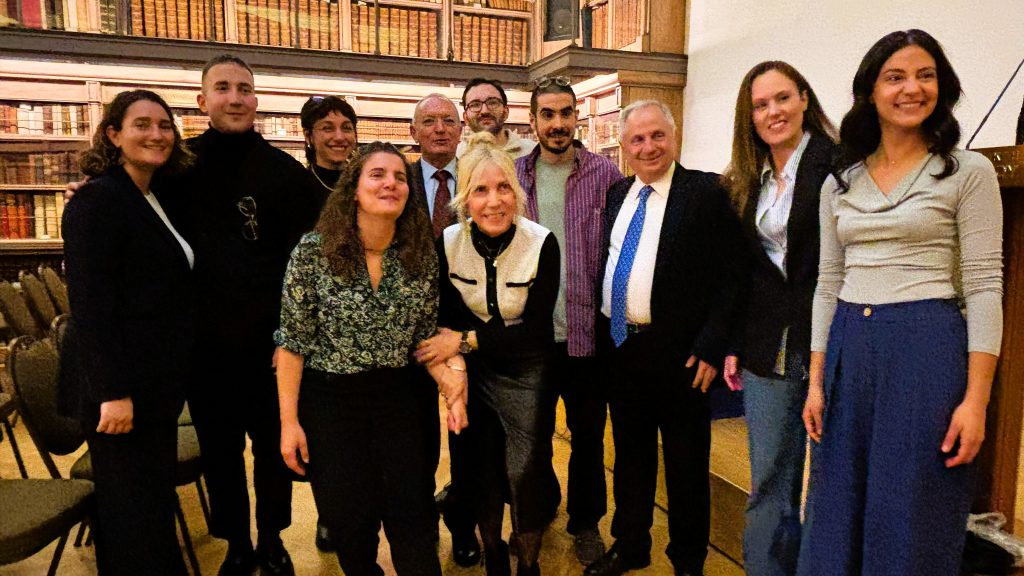
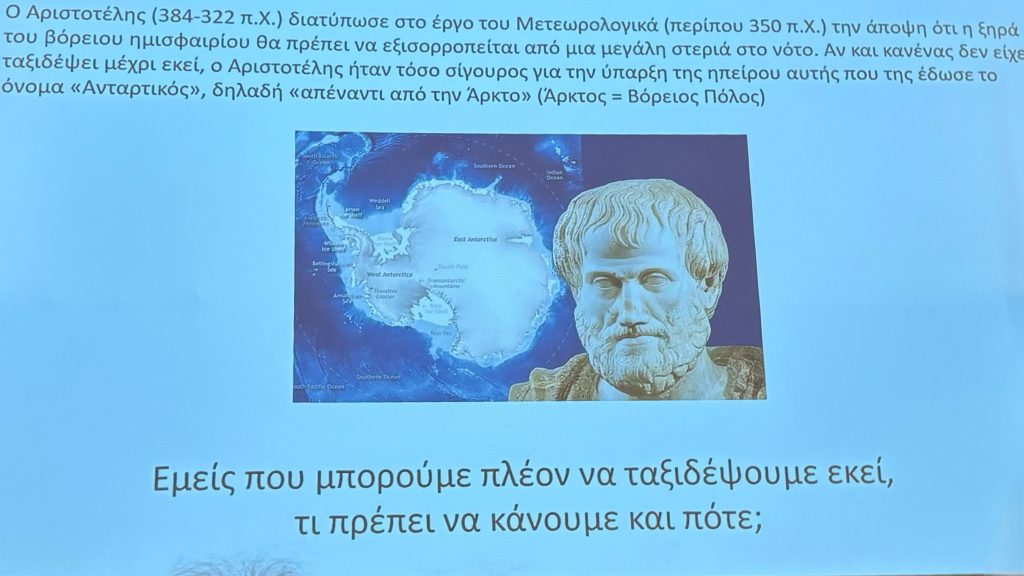
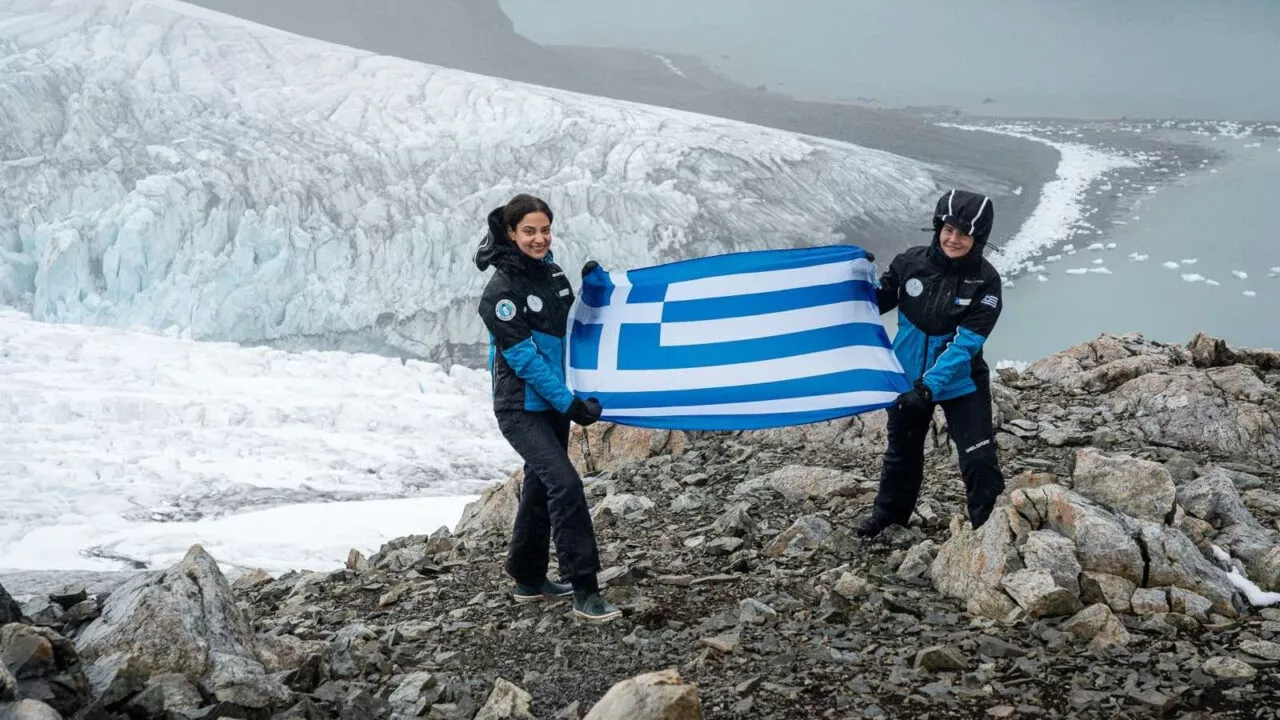
The event held on Friday, April 3, 2026, at the Amphitheatre of the Aikaterini Laskaridis Foundation, on the occasion of the 2nd mission of the Hellenic Polar Zones Society (HPZS) to Antarctica, focused on presenting the research work carried out during the mission, highlighting the contribution of Greek scientists in one of the most demanding fields of international research. The Hellenic Society for Polar Regions (HSPRS) plays a decisive role in supporting and coordinating this effort.
The Greek mission to Antarctica reflects the capacity of the Greek scientific community to actively participate in international missions and to produce substantial and distinctive research work under conditions of high complexity.
During the event, the first results of the mission were presented, while also highlighting the opportunities emerging for Greece in a field of growing international importance.
What is HPZS and what is its role?
The Hellenic Polar Zone Society (HPZS) was established with the aim of advancing research conducted by Greece in the polar regions and strengthening the country’s overall presence in them.
Its main areas of activity include:
the establishment of a Polar Institute in Greece
the upgrade of Greece to Consultative Member status under the Antarctic Treaty
the utilization of knowledge for the benefit of Greek shipping
the promotion of climate security in the Mediterranean
the creation of a Greek research base in Antarctica
the promotion of research and Greek presence in the Arctic
The two Greek research missions to Antarctica carried out to date constitute the most tangible outcome of this strategy. They were made possible through cooperation with the Bulgarian Antarctic Institute, which hosted the Greek team, and through the sponsorship of Laskarides Shipping Company Ltd.
The Event
Opening remarks – The Antarctic framework
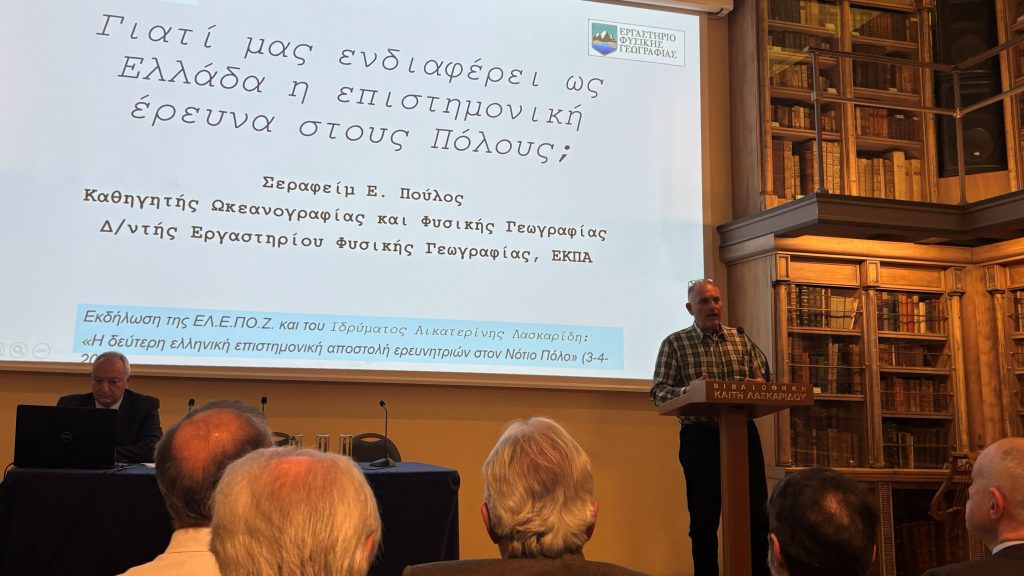
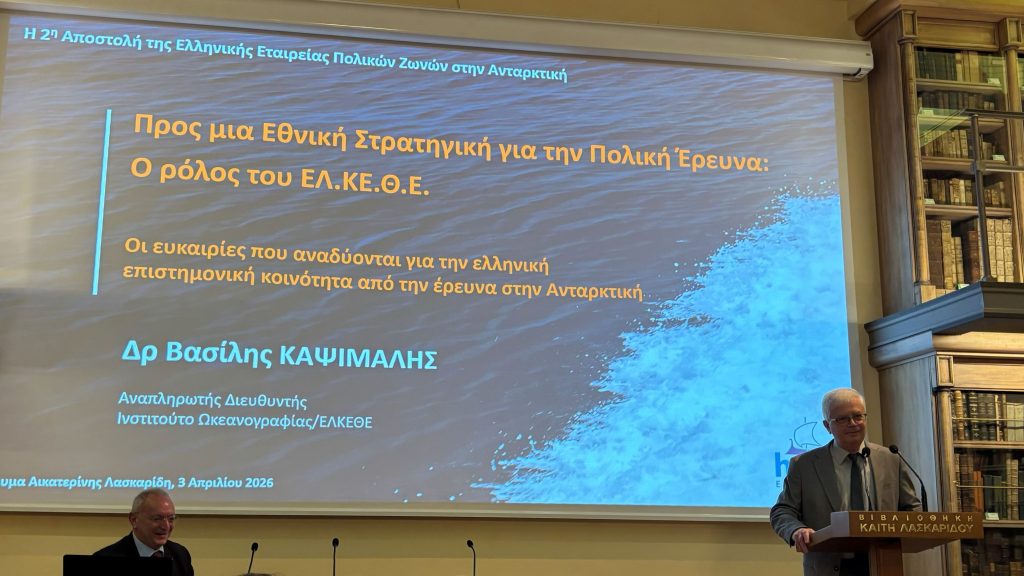
The event was opened by the President of HPZS, Dr. Athanasios Mavraeidopoulos, followed by a welcome address by Dr. Serafeim Poulos, Professor at the National and Kapodistrian University of Athens. Subsequently, Dr. Vasileios Kapsimalis from the Hellenic Centre for Marine Research (HCMR) elaborated on the dimension of national strategy for polar research.
Athanasios Mavraeidopoulos
Serafeim Poulos
Vasileios Kapsimalis
These interventions shaped the framework for understanding the importance of Antarctica:
as a continent dedicated exclusively to scientific research
as a field of international cooperation
as a critical factor in the global climate system
Particular emphasis was placed on the strategic importance of polar research for Greece and on the need to transition towards a coherent national policy with stable funding.
The researchers and the scientific presentation of the mission
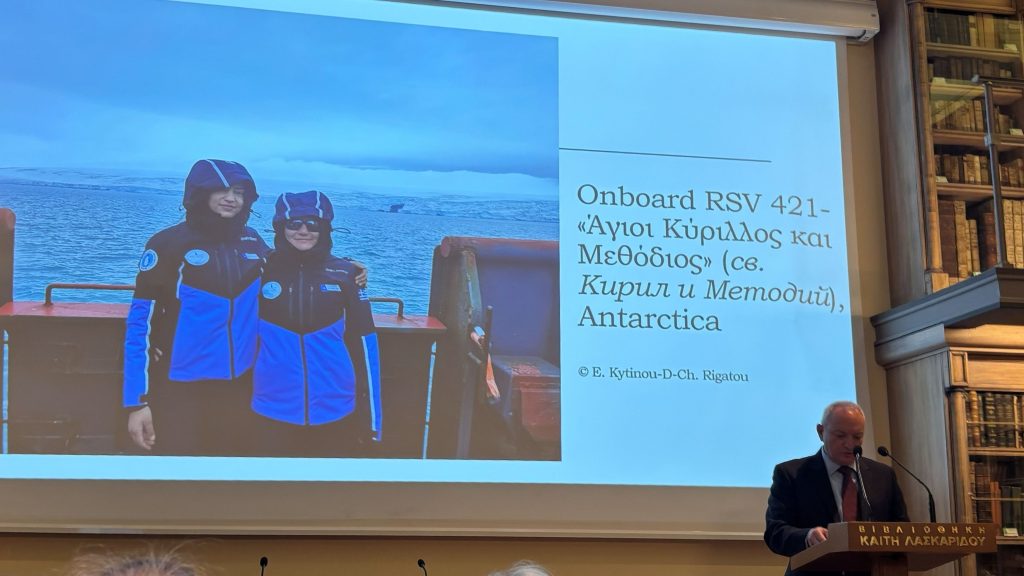
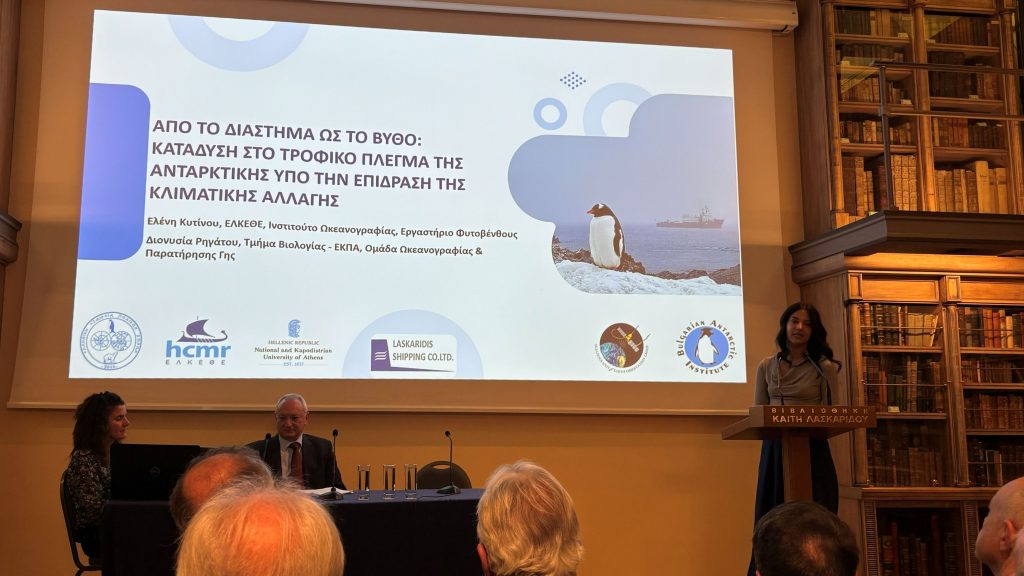
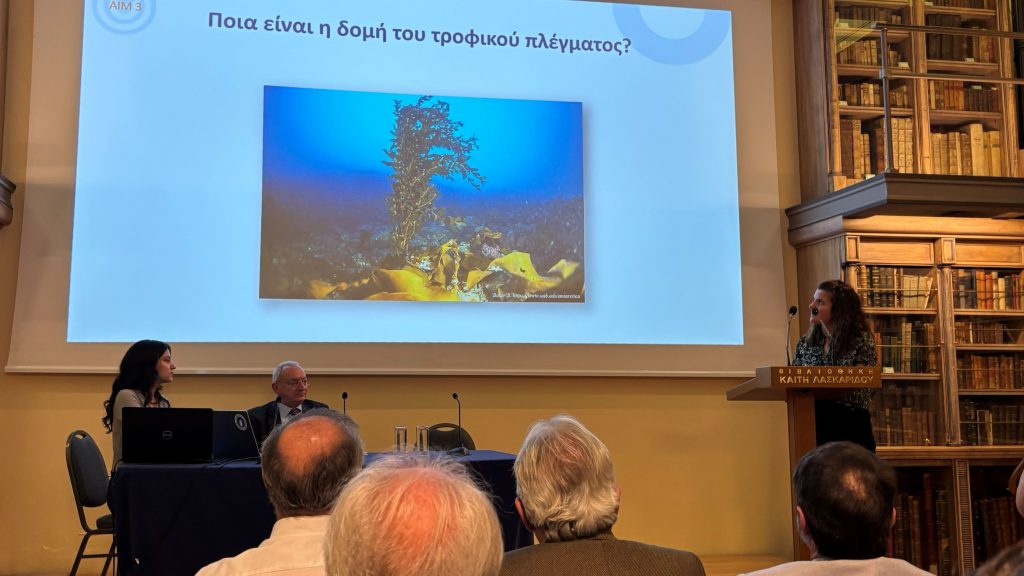
The main part of the event was dedicated to the presentation of the first scientific findings by the mission’s researchers. Dionysia–Christina Rigatou, oceanographer–biologist at the National and Kapodistrian University of Athens, and Eleni Kytinou, biologist at the Hellenic Centre for Marine Research (HCMR), presented the work they carried out during their stay in Antarctica, where they lived and worked for 21 days under particularly demanding conditions, as part of an international mission and in collaboration with foreign research institutions.
Their presentation, titled:
“From space to the seabed: diving into the Antarctic food web under the impact of climate change”,
focused on the functioning of the marine food chain and the changes induced by climate change.
Dionysia–Christina Rigatou
Eleni Kytinou
Scope and significance of the research
The research examines the structure and function of the Antarctic food web, from microorganisms to higher species.
Particular emphasis is placed on:
phytoplankton, which forms the base of the food chain
krill, which acts as a critical intermediary link for the survival of larger organisms
Changes at these levels can affect the entire ecosystem, as well as the broader global climate system.
Methodology
The research approach is based on:
a combination of satellite data and in situ measurements
analysis of biomass and biodiversity
an ecosystem-based approach
This interdisciplinary methodology enables the understanding of changes across different scales.
Key features of the mission
a dive was conducted for the first time in the area near the Bulgarian base
data were collected in environments of high ecological significance
environmental pressures such as climate change and human activity were recorded
The initial findings indicate that ecosystems show significant variability and require long-term monitoring. At the same time, part of the collected samples will be used for further research in university institutions, while their analysis in a specialized laboratory environment is also foreseen at no cost.
Intervention by the Laskaridis Foundation
At the close of the event, the representative of the Laskaridis Foundation, exclusive sponsor of HPZS, highlighted the role of technology and shipping.
The intervention focused on the connection between:
artificial intelligence
shipping
scientific research
as well as on the importance of collaborations with universities and international institutions such as MIT, Daedalus, and Komvos.
Reference to Dr. Adrianos Golemis
It is worth noting that Dr. Adrianos Golemis, Corresponding Member of Komvos, is also a member of the Board of Directors of the Hellenic Polar Zone Society (HPZS). He serves as Head of Mission Medicine at the European Space Agency (ESA) and is the first Greek to have successfully completed ESA’s astronaut selection process, with his astronaut training expected to commence in the near future.
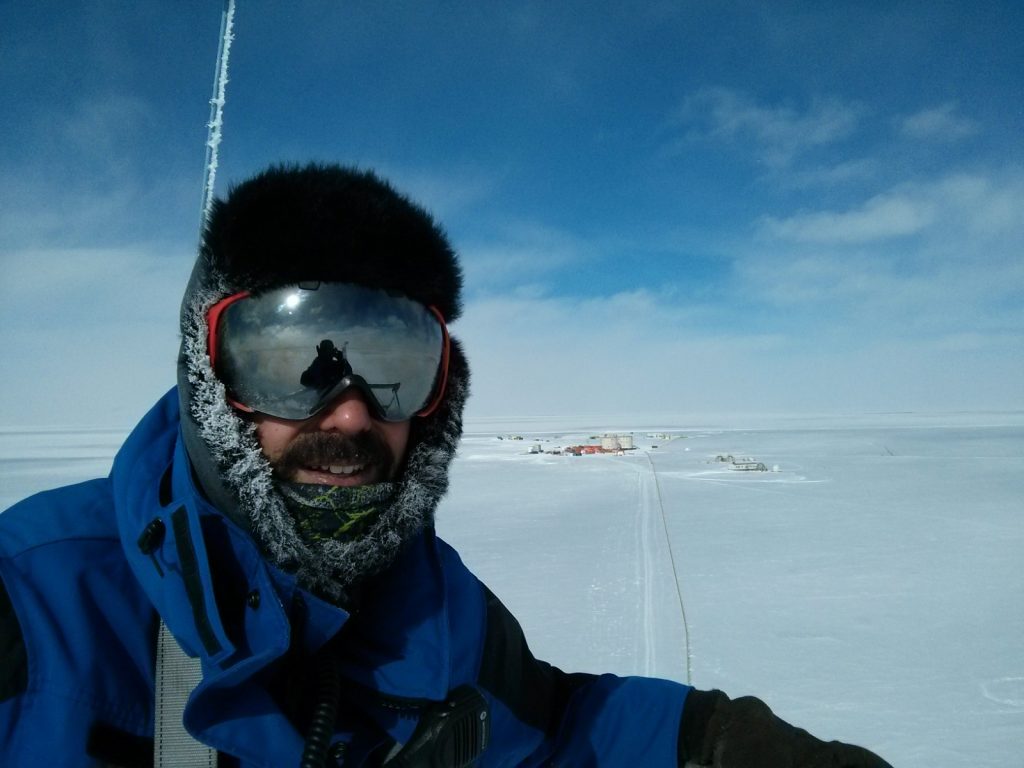
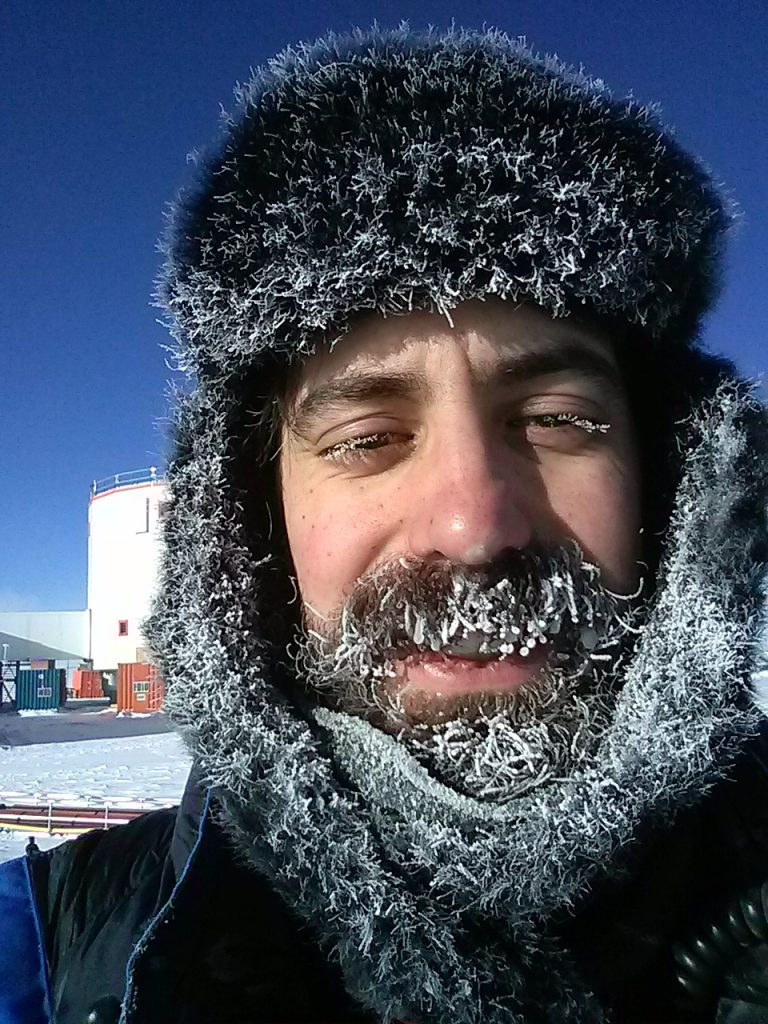
As part of his research activity, he has participated in a mission to Antarctica, where he lived and worked for one year in complete isolation at the Concordia Station, conducting European experiments on the effects of extreme living conditions on the human body and psychology.
Adrianos Golemis during his mission to Antarctica
Conclusions
The Greek mission to Antarctica demonstrates that significant scientific work is already being produced by Greek researchers. The key challenge now is its systematic promotion and utilization as a strategic advantage for the country.
In this context, the role of the State becomes particularly important, both in coordinating and supporting relevant initiatives, in order to shape a coherent national presence in the polar regions. The experience of other countries in the region, such as Bulgaria, which maintains its own base in Antarctica, highlights the potential of a more structured approach.