and the “North–South divide” in the Eurozone
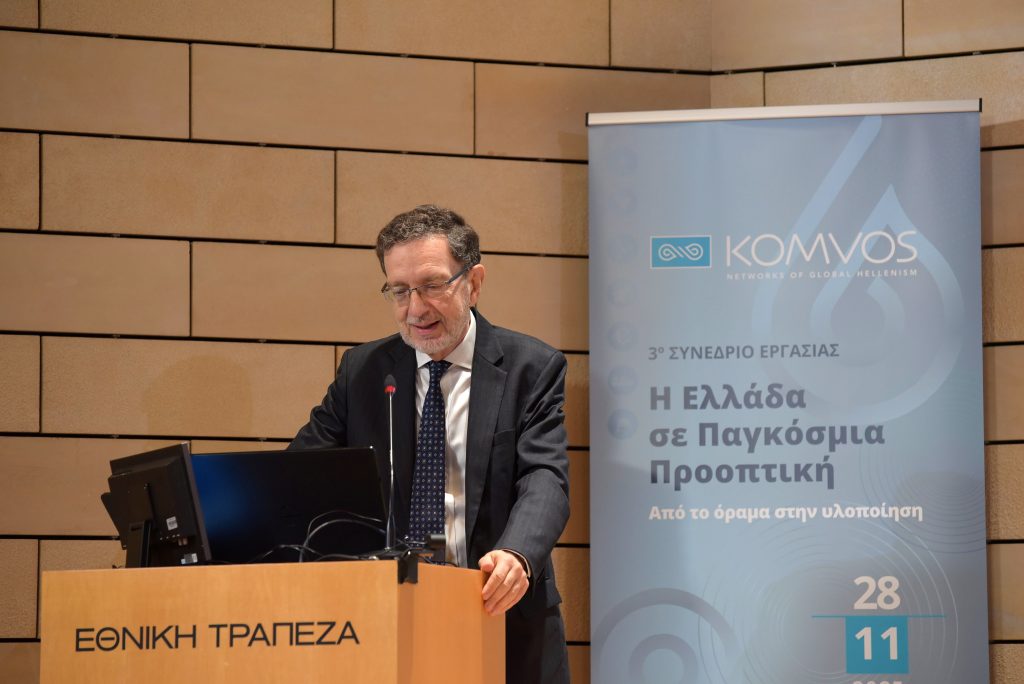
Where does Greece stand in terms of wealth and financial behavior — in the European North, the South, or as an exception? This question framed the presentation of the initiative “ENNOIA– Empowering households in their financial decisions” at the 3rd Annual Conference of Komvos, hosted at the Karatzas Mansion of the National Bank of Greece.
ENNOIA, an initiative by Komvos, Prof. Michael Haliassos, the National Bank of Greece, and Accenture Greece, aims at the substantive financial empowerment of households through research, innovative tools, and outreach activities that strengthen their resilience and confidence in financial decision-making.
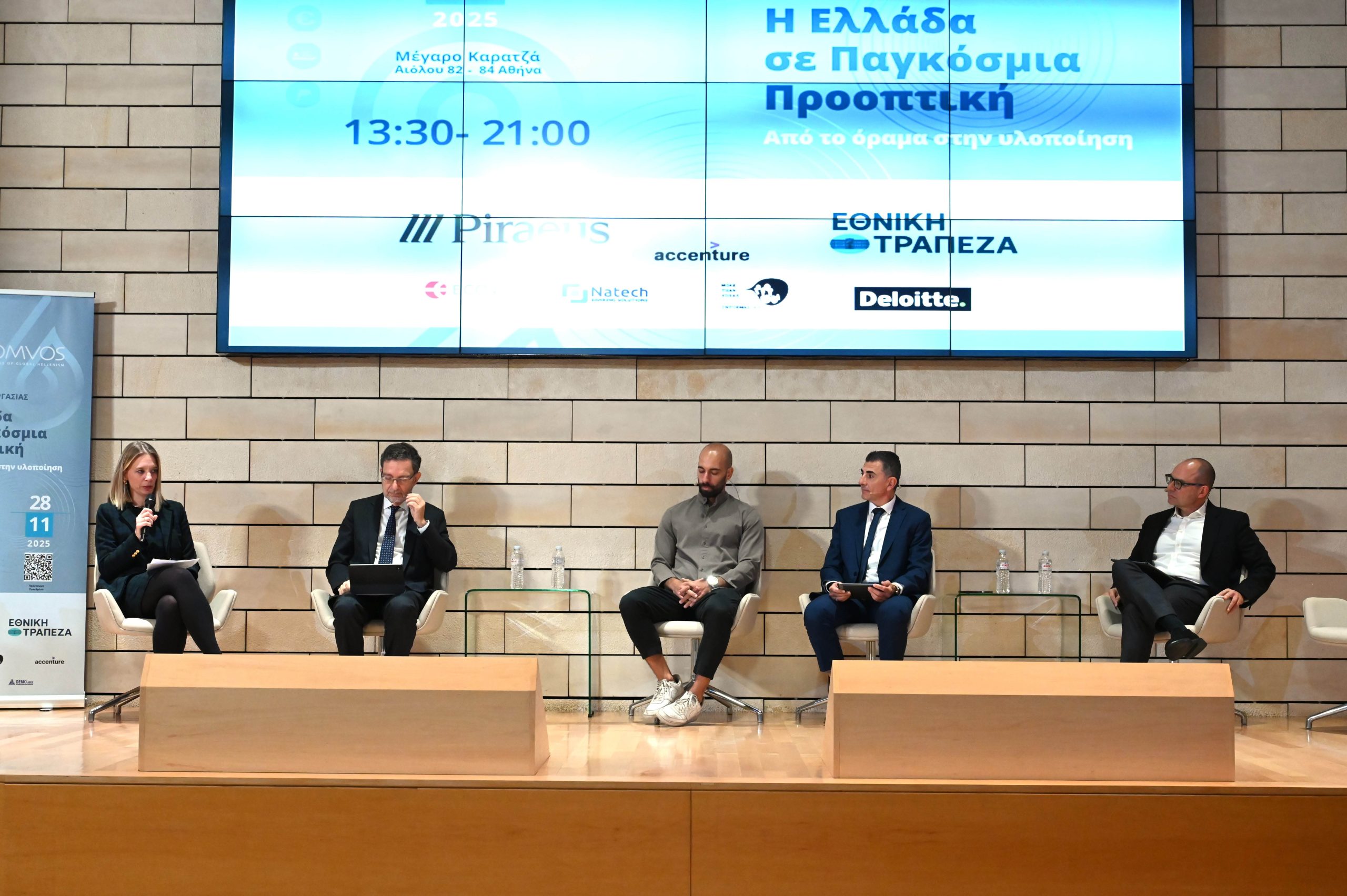
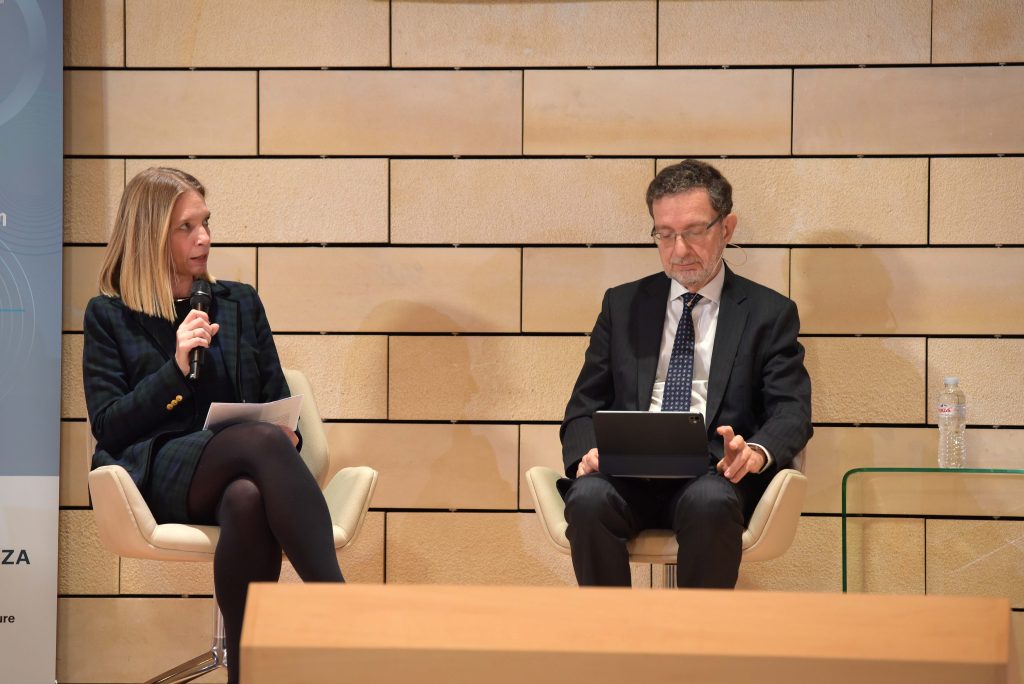
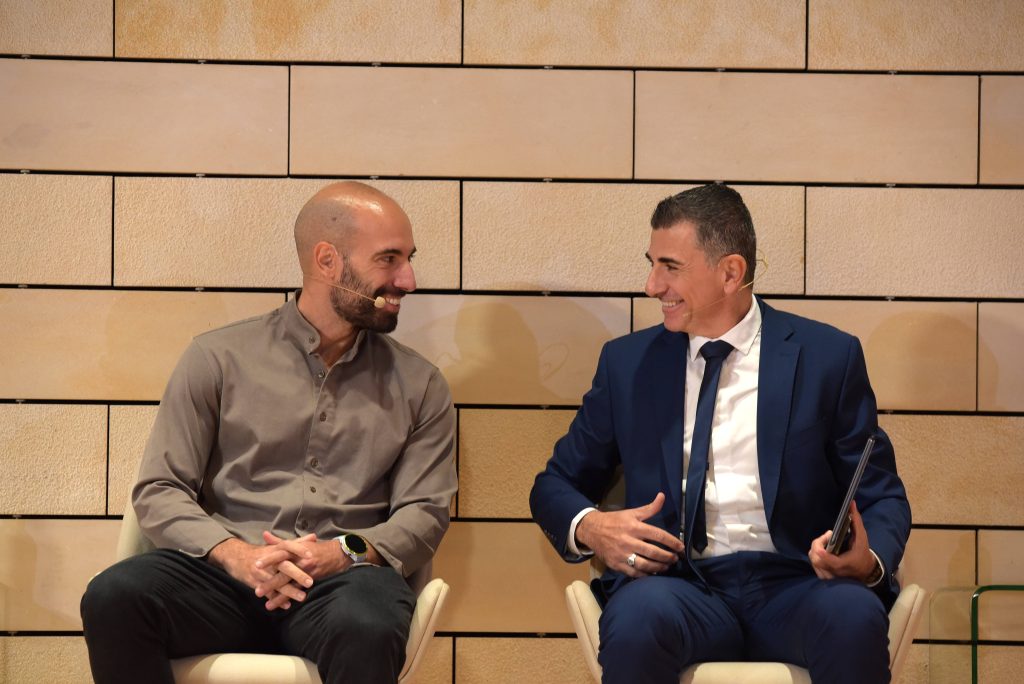
The panel, moderated by Demie Goudoufa (National Bank of Greece), included Konstantinos Zanetopoulos (Accenture Greece), Panayiotis Andreou (Cyprus University of Technology, Financial Wellbeing Institute), Kostas Faliangas (Wealthyhood), and Michael Haliassos, who opened the discussion with a presentation of key findings from a major study conducted in collaboration with Panagiota Tzamourani (Deutsche Bundesbank).
Greece’s position between the Northern and Southern Eurozone countries
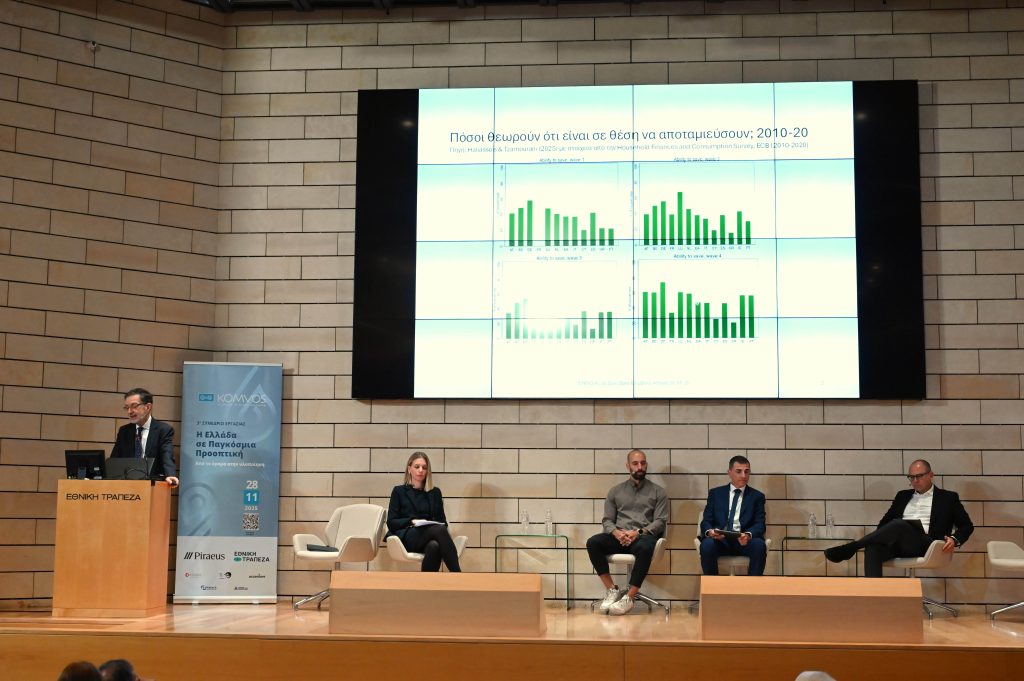
The presentation by Prof. Michael Haliassos was based on data from the large European Household Finance and Consumption Survey (HFCS) of the European Central Bank, which captures over time the wealth and financial behavior of households across all Eurozone countries.
Data for Greece, spanning four waves (from 2009 through the pandemic period), depict a picture that is unsurprising — yet now precisely documented:
The share of households that feel they can save is among the lowest in Europe and has steadily declined since the crisis.
The most common savings purpose is “for unexpected events” — for unforeseen expenses, for children, for health — and less for purchasing a home.
The value of Greek household assets is the lowest across both Northern and Southern Eurozone countries, while their debt levels are also among the lowest.
The picture is clear: Greek households rely less than those in other countries on financial products and borrowing to build wealth, while remaining exposed to income and policy uncertainty.
Yet in one respect, Greece occupies a positively exceptional position: wealth inequality is the lowest among all Northern and Southern countries in the sample, with the richest 10% holding a smaller share of total wealth than the Eurozone average, and the wealth Gini index being the lowest.
Greece, as Professor Haliassos noted, constitutes an exception: poorer in terms of wealth than the Southern countries, but also less unequal than both Northern and Southern countries.
This position further underscores the pressing need for financial education and empowerment of Greek households.
Public policy, tax incentives, and the regulatory framework
In response to Demie Goudoufa’s question, “what can be done to reduce these inequalities,” Michael Haliassos provided a clear threefold answer regarding the role of public policy:
Integration of financial education across all educational levels
From primary school to higher education, regardless of the field of study, citizens need to acquire fundamental skills in organizing and managing their finances.Targeted tax incentives for savings and pensions
Drawing on examples from the United States, where private retirement accounts are encouraged through tax deferral, he highlighted how policy can increase household participation in long-term savings and capital markets.A robust regulatory framework for banks and advisors
To protect investors and borrowers, oversight is needed similar to that already in place for consumer products — ensuring that “bad practices” are not replicated from one institution to another.
The private sector, on the other hand, is called upon to design simple, transparent products with automated features (defaults) and clear information, based on rigorous research. This is precisely where Ennoia fits in, as a platform for research–bank–technology collaboration.
Artificial Intelligence as an Educational Ally
The bridge from research to practice was built by Panayiotis Andreou, who presented his research proposal, “Development of an Educational AI Agent for Financial Literacy”, funded under the research pillar of the initiative.
In countries such as Cyprus and Greece, where only a small percentage of citizens meet the minimum level of financial literacy, the scale of the problem calls for new tools. The educational AI agent developed by Andreou’s team:
Leverages a decade of microdata to map citizens’ knowledge, behaviors, and attitudes;
Uses language models (LLMs) to provide personalized education in the user’s own language and level;
Draws information from a limited, verified knowledge base, continuously updated (e.g., responsible lending regulations), ensuring that answers are accurate and current.
The goal is not general theoretical information, but practical guidance on questions such as “Can I take this loan?”, “What repayment can I afford?”, and “How do I avoid over-indebtedness?”
The project will be scientifically evaluated for its impact, so that it can be scaled and utilized in the future by policymakers and banks.
Technology as a “psychological advisor” for financial behavior
Konstantinos Zanetopoulos shared Accenture’s perspective: the first bank-provided family budgeting tools, which many believed would magically change customer habits, were hardly used.
Experience has shown that our relationship with money is not simple arithmetic. It involves psychology, identity, and hope for the future. Accordingly, technology has adapted:
Apps allowing users to create “goal buckets” (e.g., travel, gadgets, holidays) and save for them.
Automatic payroll deductions into savings accounts — “effortless routines” that foster habit formation.
Micro-savings through transaction rounding, with the “spare change” directed to savings or donations.
At a next stage, data analytics tools enable the creation of household groups with similar income and spending patterns, so citizens can see how others with comparable profiles spend:
e.g., “You spend more than average on dining out, less on transportation.” Such comparisons often work more effectively than traditional admonitions.
At the same time, Zanetopoulos was clear: artificial intelligence will not replace the bank advisor, but will enhance them. For large amounts and critical decisions, citizens always seek human presence and trust. Technology opens the door, but to step through it requires information, hope, and support — precisely what Ennoia strives to provide.
Wealthyhood: from saving to an investment culture
Kostas Faliangas presented the Wealthyhood application, a long-term investment tool designed for the “everyday investor” — someone with limited time during the week but who wants to gradually build an investment portfolio.
The platform is based on four pillars — education, saving, investing, and automation — with particular emphasis on the first: through guides, articles, a glossary of terms, and a “learning by doing” experience, the user does not simply receive a ready-made portfolio but gains an understanding of risk, return, and diversification concepts.
The next step, to be launched soon, is the AI Investing Copilot within the app: a “co-pilot” that answers user questions, taking into account their risk profile and past actions. The goal is the gradual development of a responsible investment culture, far from “get-rich-quick” approaches.
Faliangas also highlighted the importance of competitions such as NBG Business Seeds, from which Wealthyhood received a special award for financial literacy: beyond the monetary prize, these competitions provide psychological motivation, visibility, and — most importantly — opportunities for strategic partnerships with institutional stakeholders.
Lessons from Cyprus: strategy, KPIs, and “Train the Trainers”
Returning to the discussion, Panayiotis Andreou described the experience in Cyprus, where a national strategy for financial literacy has been established with strong involvement from universities and a clear focus on measurable outcomes (KPIs).
A notable example is the “Train the Trainer” program:
Approximately 50 specialized trainers were educated using structured materials, covering both financial knowledge and key aspects of policy and regulatory frameworks. Each trainer is tasked with passing on their knowledge to 10–20 individuals, creating a network that can extend to cities, towns, and communities.
Until AI-based solutions become widely available, such human trainer networks remain critical for household empowerment — and represent a model that could be adapted in Greece.
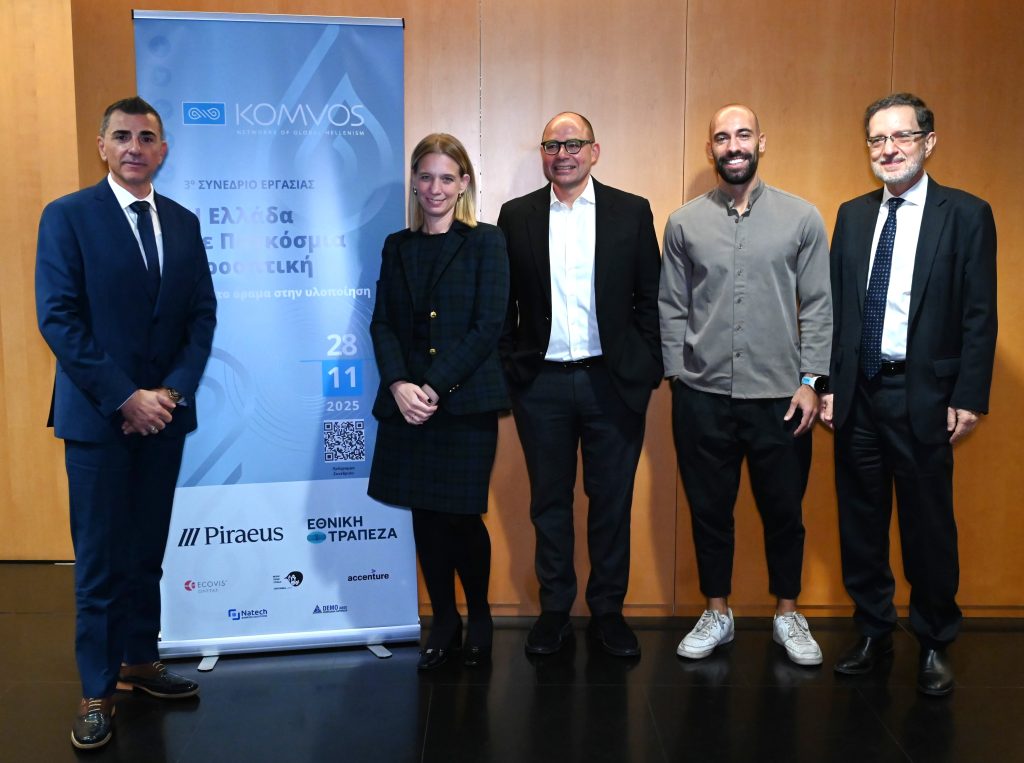
ENNOIA: from research to practice – and beyond 2026
Closing the discussion, Demie Goudoufa highlighted the overarching vision of the Ennoia initiative, which has been implemented over the past year and a half through three main pillars:
Research – Funding research studies conducted by European universities, lasting approximately 12 months, to understand behaviors, motivations, and barriers to household financial empowerment.
Innovation – Establishing a special Financial Empowerment Award within the annual NBG Business Seeds Innovation & Technology Competition, encouraging startups developing solutions for financial literacy and financial wellbeing.
Outreach – Launching the Ennoia website, which will soon showcase the initiative’s activities and will be enriched with additional content on household financial empowerment.
“ENNOIA’s activities will continue into 2026 with the same enthusiasm and commitment to practical, tangible results,” emphasized Demie Goudoufa.
In a country that, according to the data, ranks low in wealth but also in inequality, household financial empowerment is not a luxury. It is a prerequisite for social cohesion, sustainable development, and — perhaps most importantly — hope that the economic future can be better than the present.
Watch the video of the Ennoia session at the 3rd Komvos Conference on the Komvos YouTube channel: M. Haliassos – ENNOIA, 3rd Komvos Conference