Two paths that illuminate Greece’s footprint in space
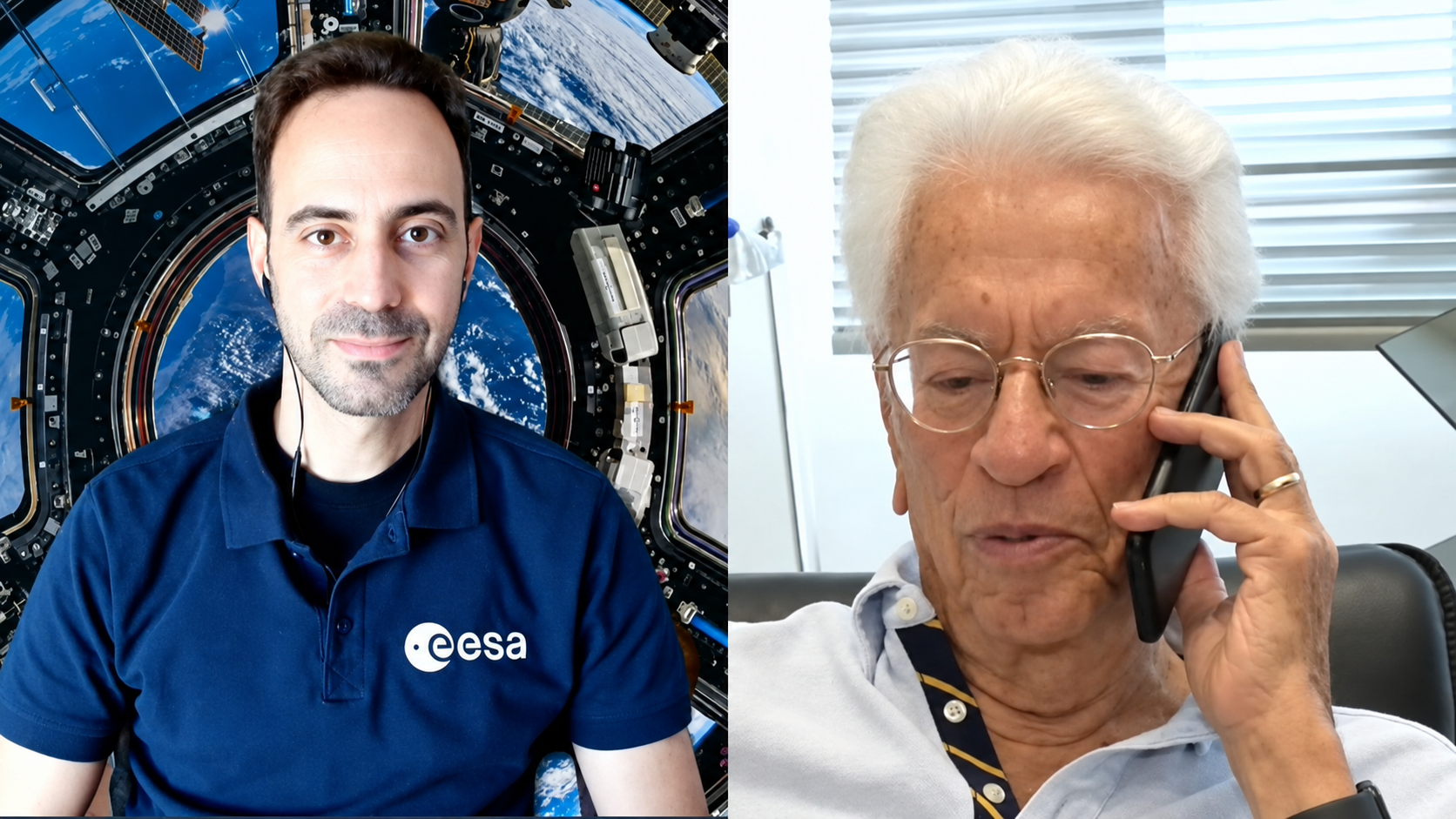
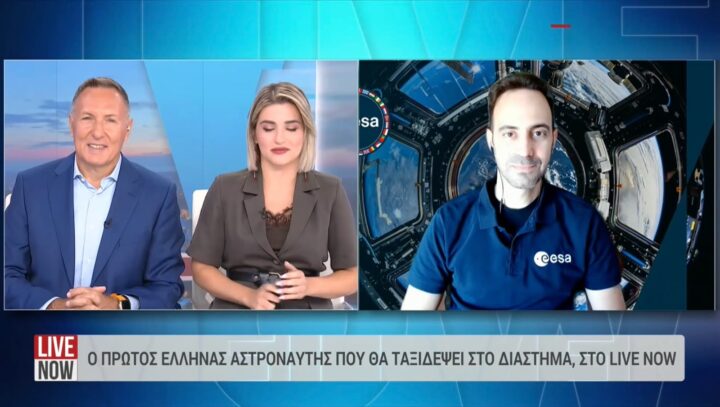
Stamatios Krimigis and Adrianos Golemis, members of Komvos – Networks of Global Hellenism, met on ERTnews’s LIVE NOW programme for a conversation of particular significance: the long history of space research meets the preparation for Greece’s next presence in a crewed space mission.
The discussion ranged from the Voyager missions, which continue to send valuable data nearly half a century after their launch, to Adrianos Golemis’s training for his mission to the International Space Station. It also turned to Greece’s space sector: the people, research and businesses already shaping an internationally oriented presence.
Adrianos Golemis: the path to the International Space Station
Speaking from Toulouse, where he is undertaking his training, Adrianos Golemis, Head of Mission Medicine at the French MEDES Institute and the European Space Agency (ESA), the first Greek selected through the European astronaut selection process, and a Corresponding Member of Komvos, explained that the first, more general phase of his preparation began in March 2026. On 19 September, the team will travel to the United States for the more intensive stage of its training.
The launch is currently planned for the second half of summer 2027. He was quick to clarify, however, that space-mission schedules are always subject to rigorous safety reviews; delays are therefore not unusual.
The mission is expected to involve a stay of approximately two weeks aboard the International Space Station, with an intensive programme of experiments. These will include Greek research experiments which, as he noted, aim to generate tangible benefits and applications on Earth.
The planned PAM-6 mission will have a crew of four. The announced crew includes French ESA astronaut Thomas Pesquet as commander — whom Adrianos Golemis had supported as a flight surgeon during his previous mission, as he stated in the interview — and Czech ESA astronaut Aleš Svoboda as pilot. Adrianos Golemis is expected to join the crew as mission specialist, while the fourth crew member is due to be announced at a later stage.
Training that tests the human being before and after flight
Asked about the most demanding aspects of his preparation, Mr Golemis described a programme that extends far beyond becoming familiar with a mission’s technical systems. It includes, among other elements, individual monitoring of nutrition and physical fitness, training in the operation of spacecraft and International Space Station systems, and emergency-response exercises.
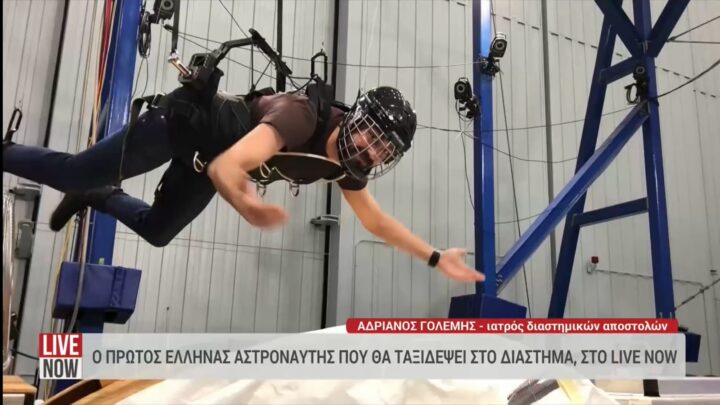
Training in crew-coordination procedures, the use of robotic systems, and simulations of tasks associated with activities outside the spacecraft also plays a central role. It is preparation that brings together technical knowledge, operational readiness and the human body’s ongoing adaptation to the conditions of spaceflight.
One of the most demanding elements for him, he said, was a post-return survival exercise. In such scenarios, after a splashdown, the crew must board a helicopter and even deal with the possibility of it crashing into the sea — in other words, rescue themselves and the person beside them after having just returned from microgravity.
The aspiration to become an astronaut had been with him from an early age. Yet he also reflected on the value of the journey itself: a process in which final selection can never be taken for granted, and one from which a person can derive fulfilment in its own right.
Stamatios Krimigis: from Chios to the major missions of the Solar System
In the second part of the discussion, Stamatios Krimigis, Emeritus Director of Space Programs at NASA’s Johns Hopkins University, former National Representative of Greece to the European Space Agency, former President of the National Council for Research and Technology, and a Partner of Komvos, returned to the history and the present of the Voyager missions — two landmark missions that opened a new chapter in the systematic exploration of the outer planets and, later, interstellar space. Mr Krimigis has been associated with them from their outset, having served as Principal Investigator for the Low Energy Charged Particle (LECP) instrument, carried by both spacecraft and designed to measure low-energy charged particles.
As he noted, September 2027 will mark fifty years since the Voyager launches, although their original design envisaged an operational lifetime of only four years. Their longevity is itself a remarkable scientific achievement: the two spacecraft continue to transmit measurements from the interstellar environment, far beyond the boundaries of the Solar System.

Today, their continued operation depends on the available power from their radioisotope thermoelectric generators, which is gradually declining. Mr Krimigis said that, since March, he and his team have been contributing to efforts to extend the missions’ operational life. Managing this diminishing power supply involves the gradual shutdown of instruments and systems, allowing the measurements considered most important to remain active.
His account also had a personal dimension. Born and raised on Chios, he recalled the message he often conveys to pupils who ask what he would say to a child aspiring to follow such a demanding, seemingly out-of-reach path: that nothing is impossible when there is a commitment to excellence and sustained hard work.
This observation connected naturally with the case of Adrianos Golemis. Mr Golemis said that an earlier talk by Stamatios Krimigis had inspired him, while the distinguished scientist spoke warmly of his ability, preparation and resilience in particularly demanding conditions.
In the same context, Mr Krimigis observed that the term “manned mission” no longer reflects the reality of today’s crews. He prefers “crewed space mission”, a choice that also reflects a wider shift in language, as women take part in space-mission crews.