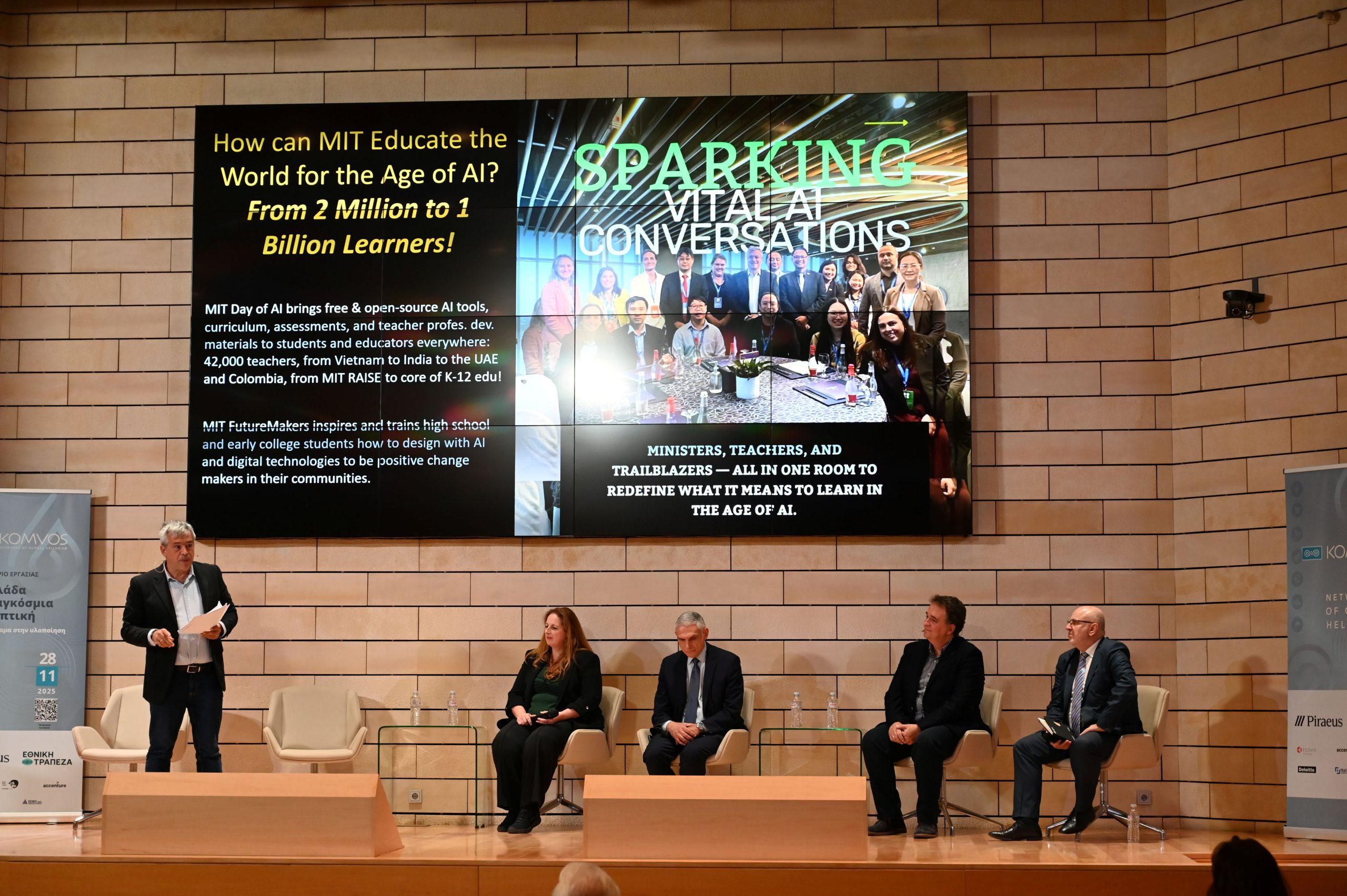
Komvos’ initiative focuses on preparing society and the economy for the era of AI, promoting access to education, empowering workers, and building trust for a sustainable and inclusive transition.
Artificial Intelligence is evolving into a general-purpose technology, with impacts that go beyond the field of innovation and reach the core of social organization: work, education, public administration, information, health, and democratic participation itself. In this context, Komvos’ initiative “AI’nclusion” approaches access to AI not as a technical privilege, but as a matter of social cohesion, democratic participation, and social investment.
As highlighted in the introduction to the session, the goal is to create a space where AI acts as a lever for empowerment: expanding opportunities rather than limiting them, reducing inequalities rather than exacerbating them, and supporting humans rather than replacing them.
Two Coordinators, One Shared Vision
The initiative is coordinated by two figures. Marily Mexi, founding member of Komvos and coordinator of the initiative, was not present at this discussion due to other commitments. The session and discussion were led by Dr. Nikolaos Mavridis, MIT PhD, academic advisor in Artificial Intelligence, with experience in both academia and projects with large organizations and public-benefit institutions.
In his opening remarks, Dr. Mavridis took a human-centered starting point: the childhood aspiration for a “robotic assistant” who could also be a friend — an idea that, years later, translates into everyday practices using tools like ChatGPT, and even inspires stories, imagination, and “visions for the future.” This personal narrative served as a bridge to the central question: will we move toward an era of meaning and prosperity, or toward a scenario of “technofeudalism,” where power concentrates, inequalities deepen, and large segments of society are left behind?

The Three Pillars of Preparation
The discussion focused on three key pillars for preparing society and the economy for the era of modern AI:
Human Capital and Universal Access to Skills
Entrepreneurs, employees, executives, public servants, vulnerable groups, and older adults need access, resources, and adaptability. The transition requires targeted upskilling and reskilling pathways, emphasizing not only digital skills but also timeless abilities: analytical, synthetic, and critical thinking, ethical skills, and lifelong learning capacity.Productivity and Competitiveness Without “Social Losses”
AI can enhance productivity, but the critical requirement is to avoid creating new societal gaps. The concept of Pro-Worker AI was highlighted: AI that empowers the worker, creates higher-value tasks, and supports smooth transitions — rather than simply replacing humans.Culture of Trust, Ethics, and Social Cohesion
Without social acceptance, understanding, and democratic oversight, no technology can advance sustainably. Trust is not a slogan; it is a structural prerequisite, especially in an era where AI affects decisions, services, and access to rights.
AI Literacy and Education at Scale
A significant part of the session focused on AI literacy and large-scale educational initiatives. The framework of MIT Open Learning was presented, highlighting a program designed not to “train AI engineers,” but to create informed and capable users who understand how systems operate, their ethical implications, and applications across different sectors. Special emphasis was placed on narrative-based learning (no programming required), stackable modules, and supportive learning tools using AI tutors. The educational dimension underscored a practical insight: delays in AI adoption often stem not from a lack of technology, but from a lack of people and mechanisms capable of leveraging it.
Panel: From Blueprint to Operational Plan
The panel clearly outlined priorities for the country’s “next step.”
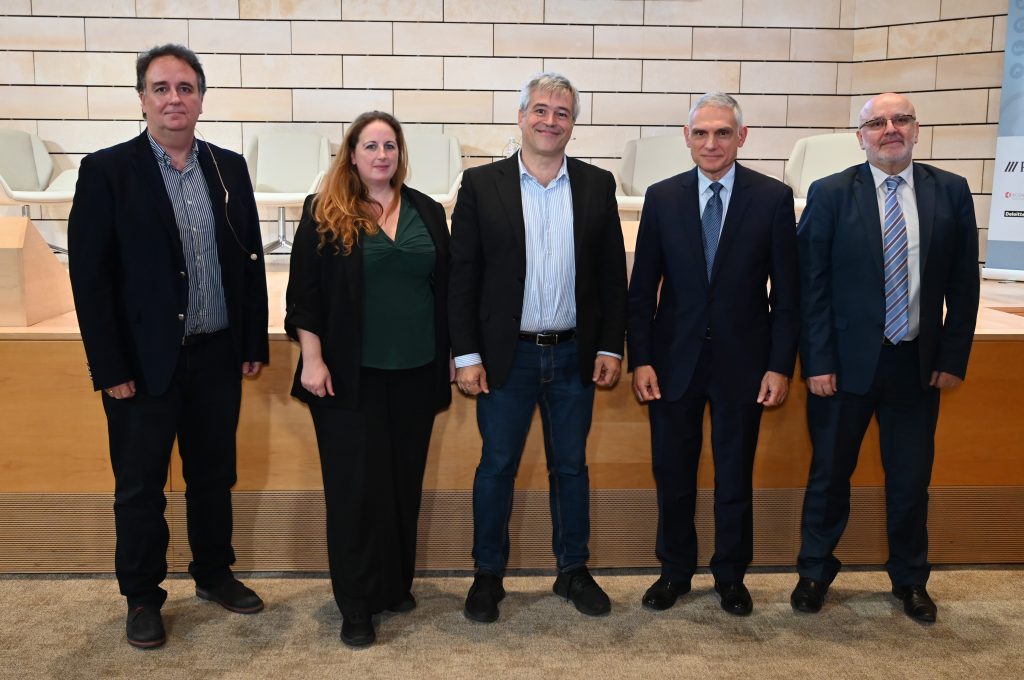
Katerina Pastra (Hellenic Artificial Intelligence Society (EETN) emphasized that while there is an AI blueprint, what is missing is an operational plan: concrete actions, timelines, milestones, and budget — making the plan visible, participatory, and implementable.
Kyriacos Sabatakakis (founding member of Komvos, CEO of Accenture) stressed the importance of education and staffing: without skilled people, the transition slows down.
Kostas Karpouzis (Panteion University) highlighted resistance to change, especially in environments like public administration, and the need for flagship projects that make benefits visible not only at the headline level but in everyday experiences.
Thanos Markantonis (Vice President, AICatalyst) focused on ecosystem integration (academia-business-government) with emphasis on skills, employment, and fast, measurable results (“becoming more doers”).
Megan Mitchell (Senior Director for Universal Learning, MIT Open Learning) presented MIT’s strategy for universal access to knowledge and AI literacy, with programs aimed at enabling citizens and professionals to become competent AI users, understanding ethical implications and practical applications across sectors.
The discussion also highlighted the need for Greece to avoid a “two-speed” model, where only large companies transform. Given that a large portion of the Greek economy consists of SMEs, the transition requires tools, incentives, and practical guidance. For example, treating AI investments as R&D expenses was proposed as a way to unlock adoption decisions.
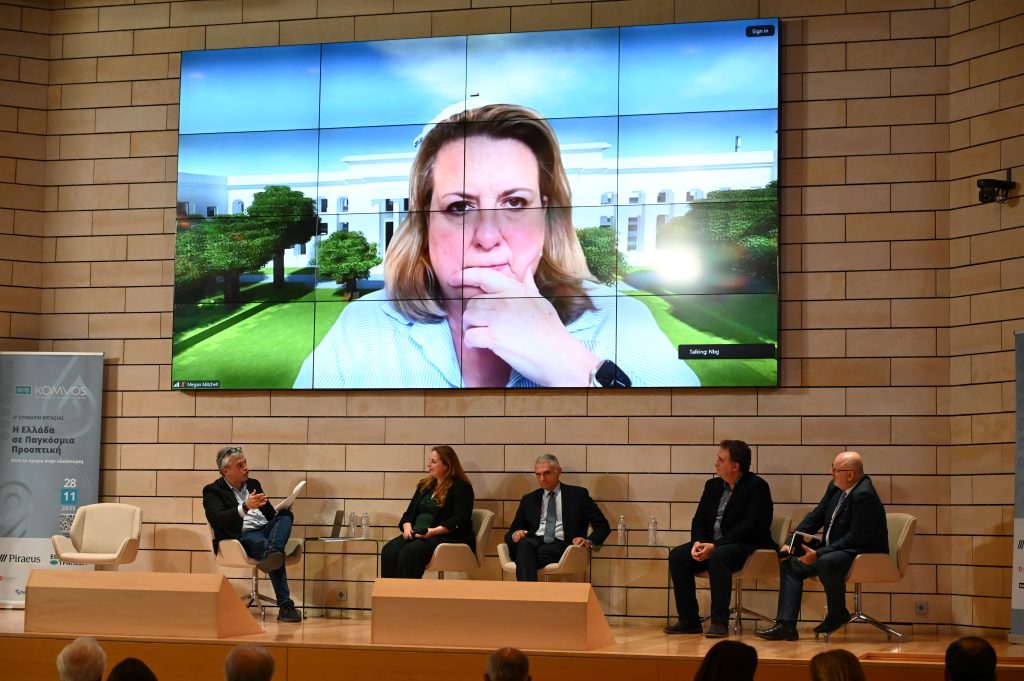

From Actions to Tools: Practical Applications for Citizens and Organizations
A key point was the distinction between “actions” and “tools”. Training cannot rely solely on lectures and traditional materials. Practical tools are needed — for example, digital applications that help organizations and citizens understand obligations, compliance frameworks, and choices (e.g., via decision trees), as well as applications that transform knowledge into everyday practical skills.
What AI’nclusion Means in Practice
Overall, the AI’nclusion initiative outlines a transition framework that combines:
Education and AI literacy for all, with scalability, accessibility, and learning tools.
Pro-Worker AI and policies that favor augmentation rather than mass replacement.
Social cohesion and trust, with rules, transparency, ethics, and democratic oversight.
Ecosystem coordination in Greece, leveraging the global Greek diaspora network as a multiplier.
Focus on results: fast, targeted initiatives, measurable impact, and examples that serve as best practices.
AI is not just a technological development; it is a challenge of social organization. If the transition is designed with human empowerment as a guiding principle, it can support a more productive economy and a more cohesive society. This is precisely what AI’nclusion aims to achieve: an AI that leaves no one behind, because progress without inclusion is not progress — it is a divide.
Komvos thanks its sponsors: National Bank of Greece, Accenture Greece, Natech Banking Solutions, Informal Advertising, DEMO Pharmaceuticals S.A., Deloitte, ECOVIS OneTax, and Piraeus Bank for supporting Komvos in realizing its vision.