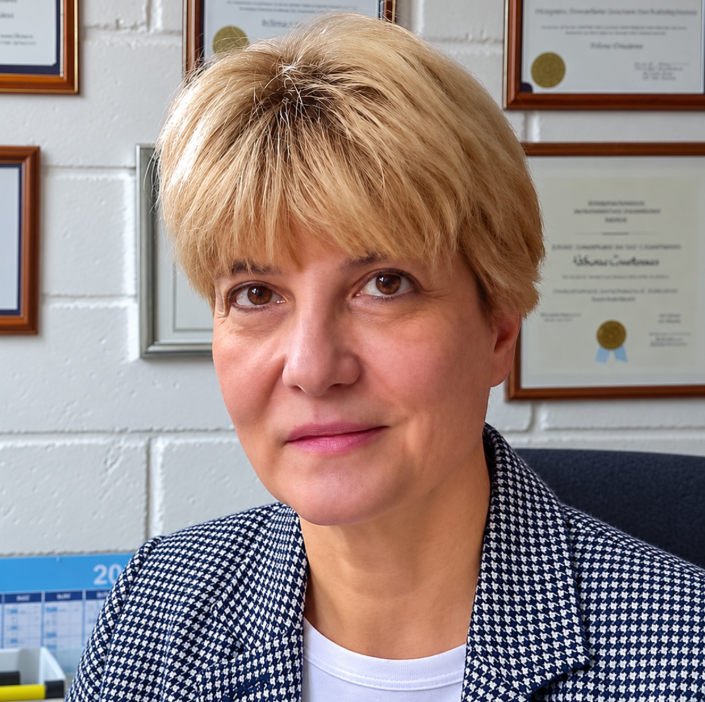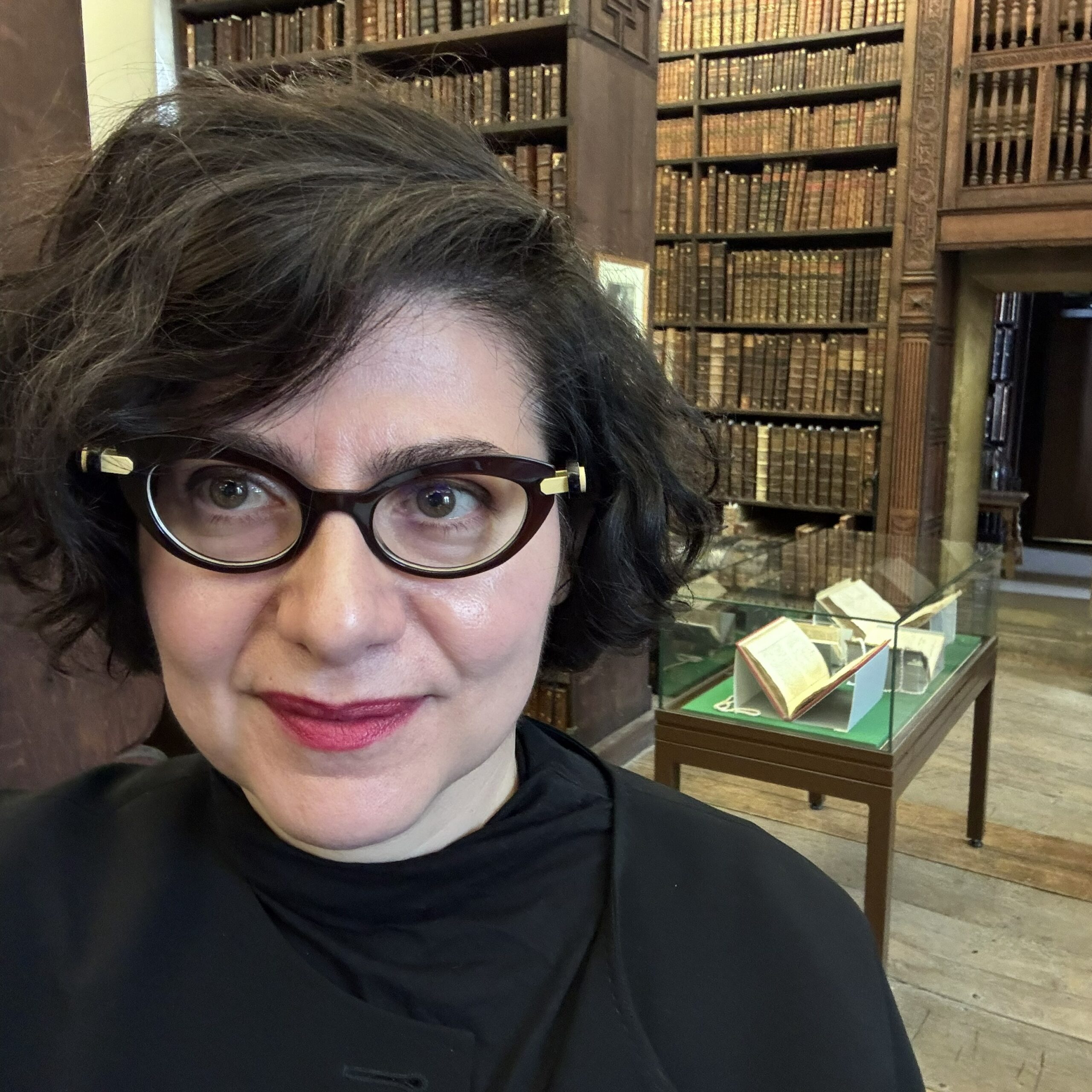
Her work connects historical linguistics with fieldwork in the communities of Pontus and the preservation of their linguistic heritage.
Ioanna Sitaridou, Professor of Spanish and Historical Linguistics at the University of Cambridge and a Partner of Komvos, has been elected President-Elect of the Societas Linguistica Europaea and will assume the presidency in 2027. The election took place at the society’s annual meeting in Osnabrück, Germany. Founded in 1966, the Societas Linguistica Europaea promotes linguistic research internationally.
A substantial part of her work consists of eighteen years of research on Romeyka and its speakers. Romeyka is an endangered Greek variety still spoken in the Trabzon region of northeastern Turkey. Its study sheds light on earlier stages of Greek and helps explain how languages evolve through prolonged contact with other languages.
What does Romeyka reveal about the Greek language?
Romeyka preserves grammatical features that have disappeared from Standard Modern Greek, including the infinitive. Ioanna Sitaridou has systematically studied its forms and uses, expanding earlier records and clarifying its connections with previous stages of Greek.
Her findings support a different interpretation of Romeyka’s historical development, with particular emphasis on its Hellenistic roots. The survival of older features coexists with centuries of change, making descriptions of the language as “unchanged Ancient Greek” misleading.
According to the Cambridge Centre for Greek Studies, Romeyka is closely related to the Pontic Greek spoken in Greece. Despite their grammatical differences, together they constitute an important branch of Asia Minor Greek.
Ioanna Sitaridou’s fieldwork with Romeyka-speaking communities
Since 2008, Ioanna Sitaridou has conducted fieldwork in Pontus, taking part in residents’ daily lives and working particularly closely with women in the communities. Repeated visits have enabled her to document the language as it is used in everyday conversation.
Romeyka speakers in the region are Turkish citizens and Muslim. Because the 1923 population exchange was based on religion, Muslim Greek-speaking communities remained in Pontus, preserving their language to this day.
Its transmission, however, is declining. In a 2024 announcement, Cambridge estimated that a few thousand native speakers remained in the Trabzon region, while noting the difficulty of establishing an exact figure. Many were over 65, and fewer young people were learning the language. Migration and social stigma further hinder its transmission to younger generations.
The trilingual Crowdsourcing Romeyka platform, launched in 2024, forms part of the effort to document the language. Developed in collaboration with Matthew Nazari, then a computer science undergraduate at Harvard, it invites speakers worldwide to contribute recordings. These contributions build a repository of spoken language for research and the development of educational materials.
That same year, Prof. Sitaridou presented her research in an exhibition at MOHA in Kavala, Greece. It attracted more than 1,000 visitors, while 100 schoolchildren received guided tours, introducing Romeyka and the challenges to its survival to a wider audience.
From fieldwork in Pontus to teaching in Chicago
In autumn 2026, Ioanna Sitaridou is a Visiting Professor at the University of Chicago. As part of the Department of Linguistics’ course programme, she co-teaches The Life and Death of a Language: Endangered Greek in Anatolia with Anastasia Giannakidou. The course draws on Romeyka data to explore language change.
Her academic journey began with a degree in French Philology at the Aristotle University of Thessaloniki. She subsequently completed a master’s degree in Linguistics at University College London and a PhD in Romance Linguistics at the University of Manchester. She has been at Cambridge since 2004 and also serves as Co-Director of the Cambridge Centre for Greek Studies.
Her interest in endangered and socially marginalised languages extends beyond Pontus. Her research encompasses Romani in Thessaloniki, Vlach in Trikala, Llanito in Gibraltar and Sri Lankan Afro-Portuguese. Throughout this work, she places particular emphasis on the knowledge, wishes and priorities of the speakers themselves.
Documenting Romeyka preserves valuable material for research and future generations. Its future as a living language depends on speakers’ ability to continue using it and passing it on to their children.