Teacher Training in AI Literacy
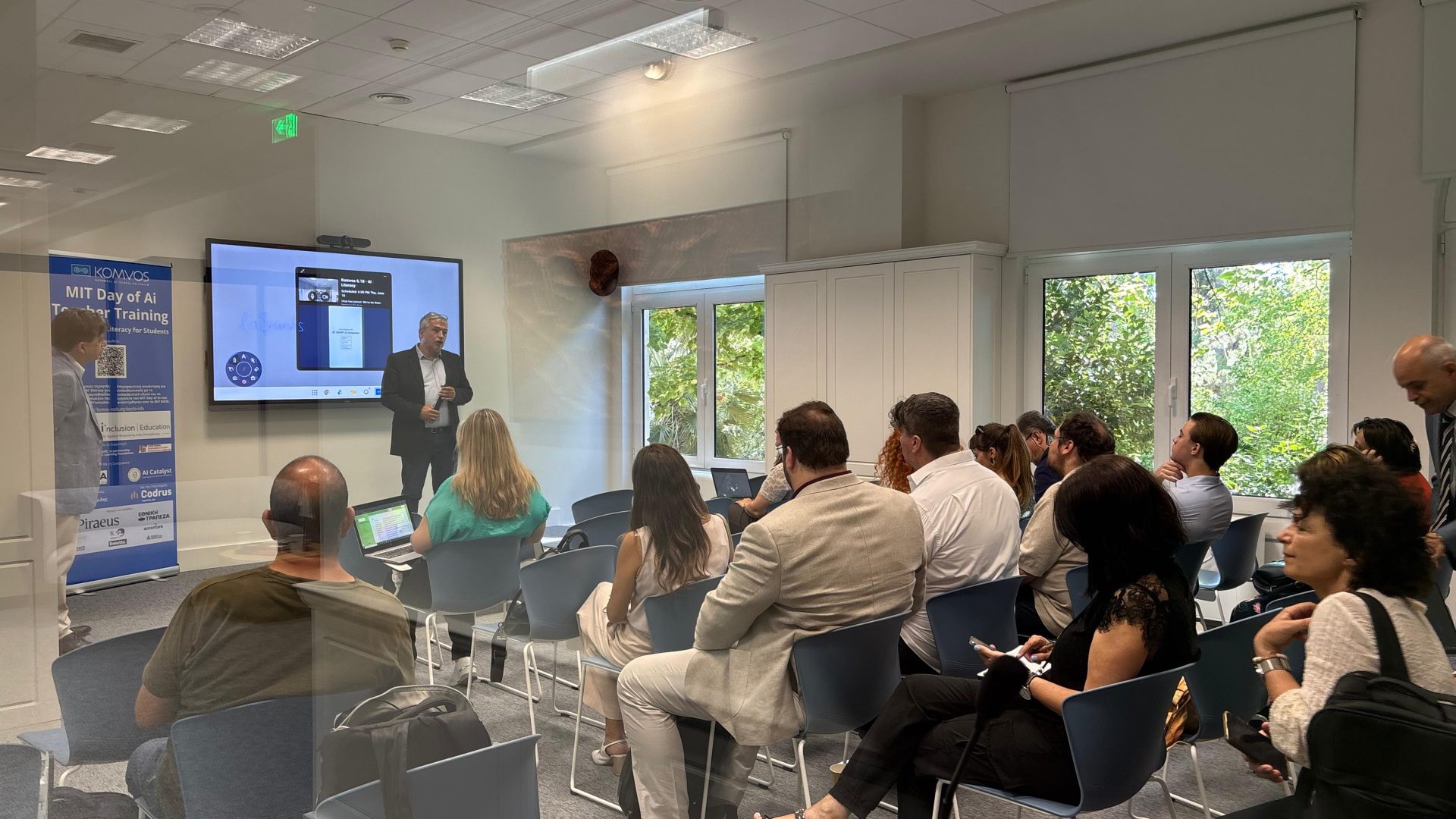
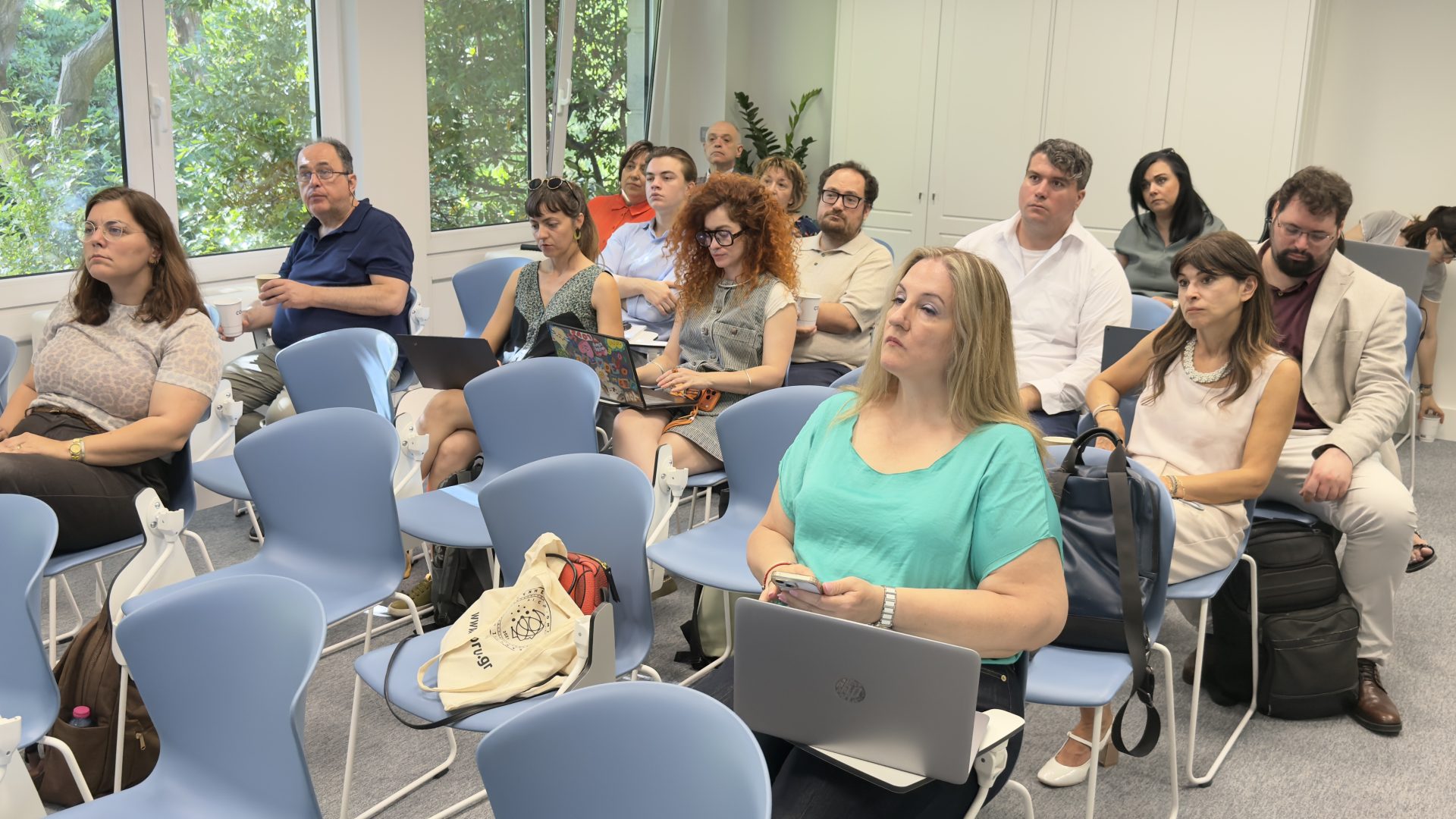
On 18 June 2026, Komvos held the first MIT Day of AI Teacher Training in Athens, hosted in Kifissia. The seminar was addressed to educators and focused on Foundational AI Literacy for Students.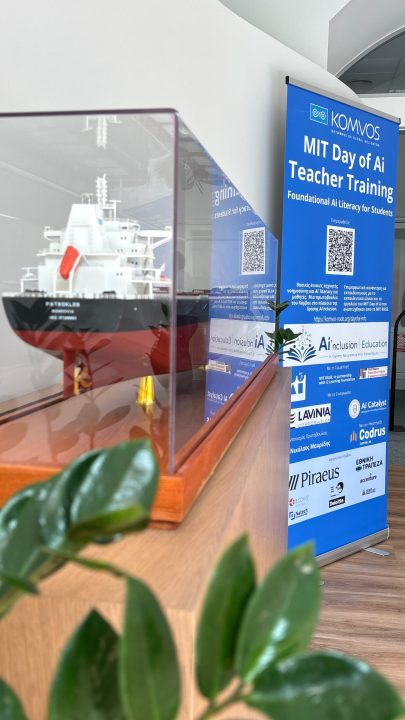
The session was hosted at the premises of Lavinia Corporation / Laskaridis Shipping, in the historic Cecil building in Kifissia, and formed part of Komvos’ Ai’nclusion initiative, which focuses on the relationship between artificial intelligence, education, inclusion and equal access to knowledge.
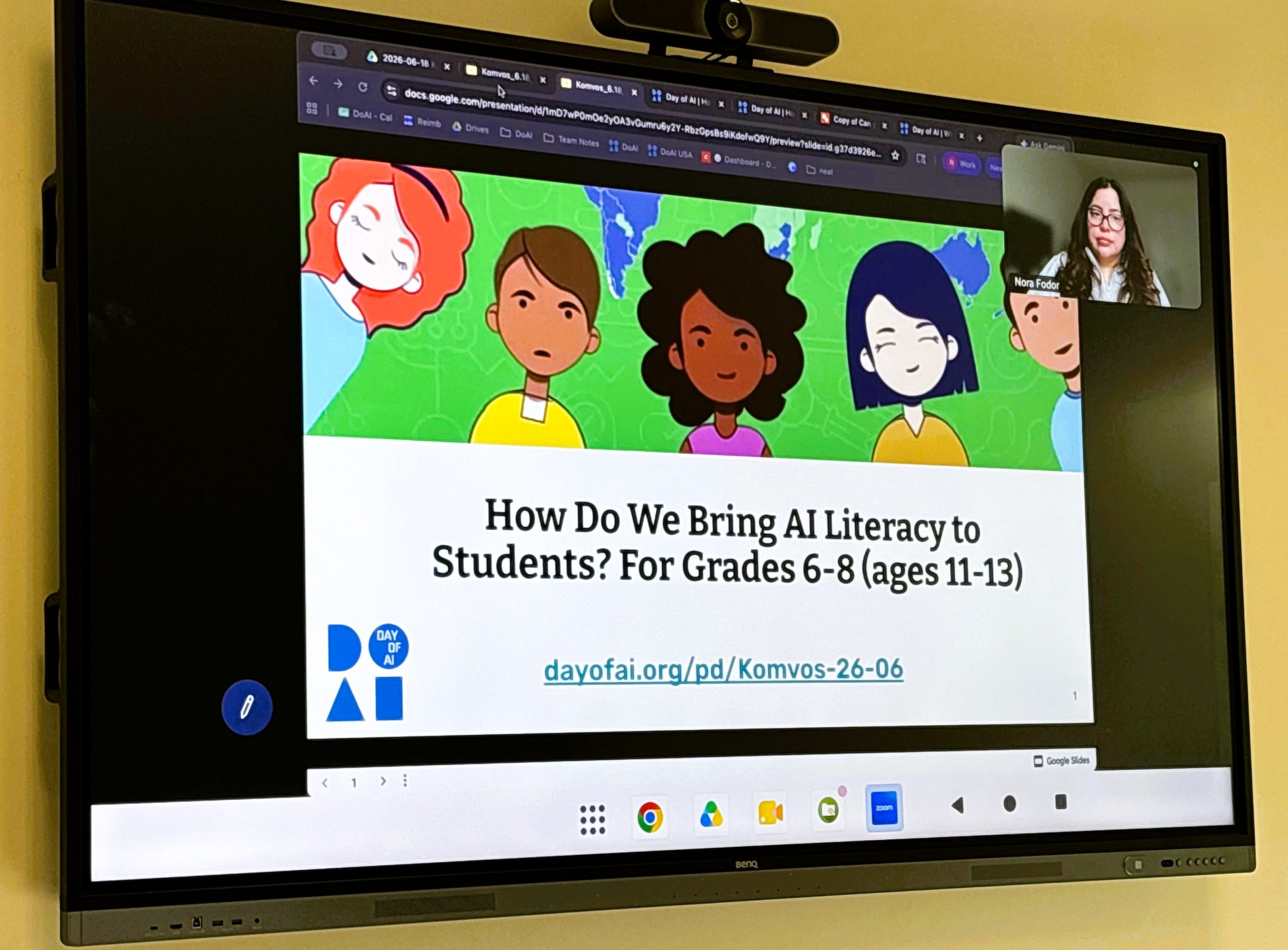
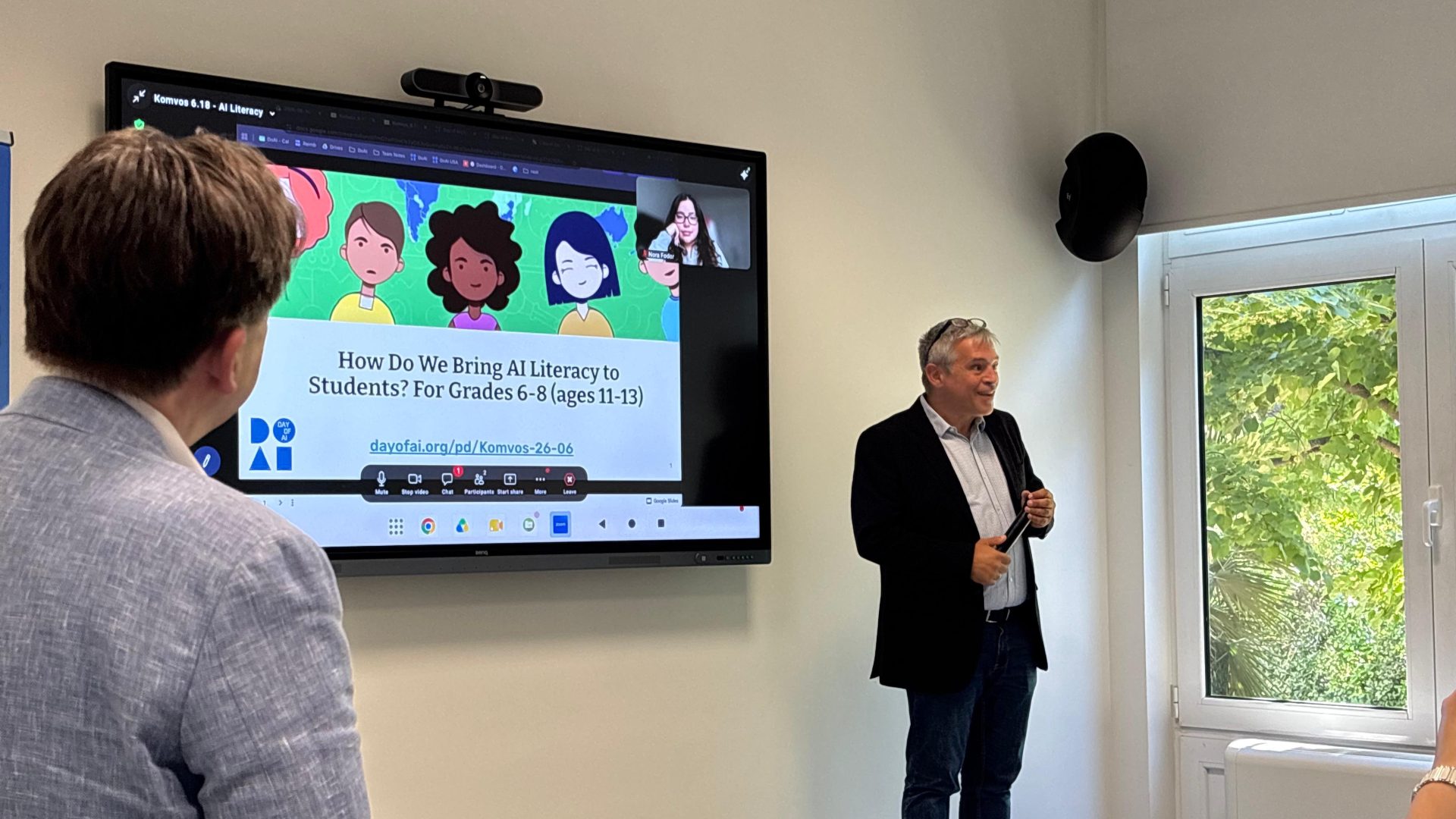
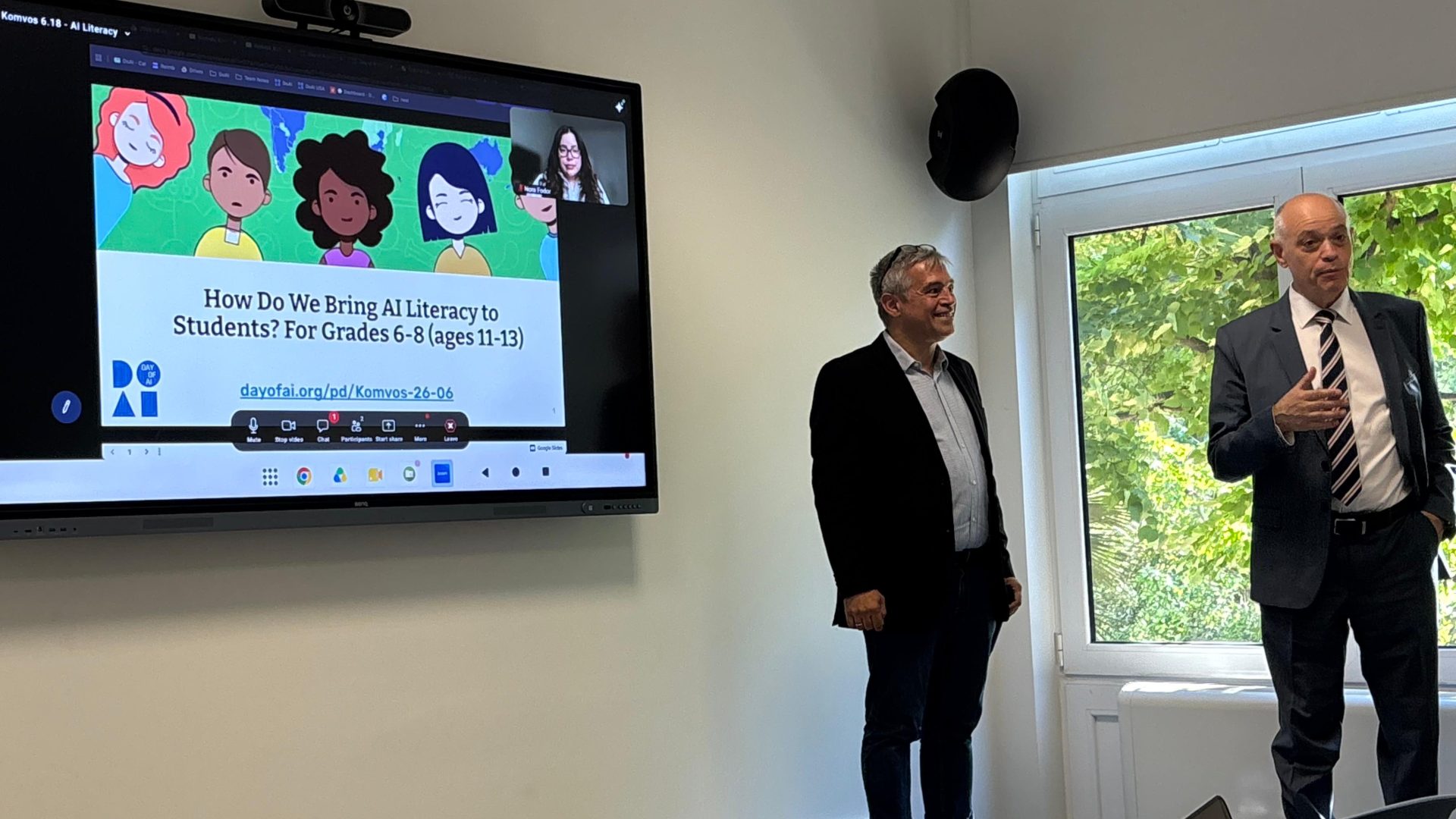
The training was delivered by Nora Fodor, a programme instructor, who joined the participants online from the United States and presented the logic of the MIT Day of AI curriculum, developed by MIT RAISE – Responsible AI for Social Empowerment and Education and the i2 Learning Foundation, and discussed how it can be used in the classroom and integrated into school activities.
The programme is designed for middle and high school students and includes activities that help children understand what artificial intelligence is, how machines “learn”, and why the quality of data affects their results. It also introduces issues such as bias, as well as broader ethical and practical questions that students need to understand in order to participate meaningfully and responsibly in the transition to the age of AI.
From Theory to Educational Practice
The particular value of the seminar lay in the fact that it approached artificial intelligence in a practical, accessible and pedagogically structured way. The participating educators were introduced to activities that can be transferred to the classroom without requiring prior specialised technical knowledge in computer science.
Nora Fodor presented to the educators the student experience as it would unfold in the classroom: from the initial question, “What comes to mind when you hear the term AI?”, to the understanding of key concepts such as the distinction between human thinking and machine prediction, the notion of an algorithm, the importance of data, and the potential biases embedded in artificial intelligence systems.
Through simple examples — such as a cake recipe, image recognition, a streaming tool or a driverless car — the seminar showed how artificial intelligence can become the subject of meaningful
learning. Students are invited to observe the technology around them, analyse it, discuss it and understand that its use is connected with choices, limits and social consequences.
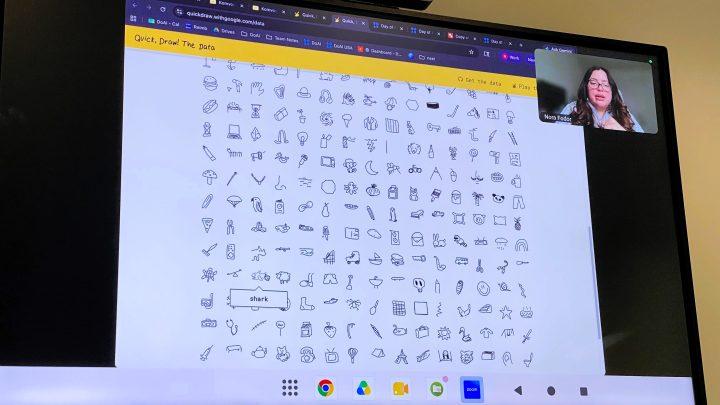
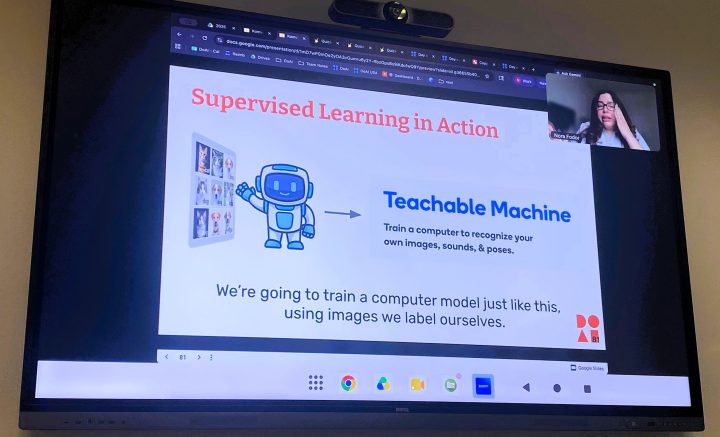
As part of the training, indicative tools such as Quick, Draw! and Teachable Machine were presented, allowing students to observe how a model recognises shapes, how it is trained through examples, and how it is affected by the quantity and diversity of the data it receives. The aim of the approach was to help educators understand the methodology and rationale of the activities, rather than to present the programme’s educational material in full detail.
Artificial Intelligence as a Matter of Education
The seminar highlighted a central idea: AI literacy is not only about the use of digital tools. It concerns the ability of young people to understand how the systems that already influence information, entertainment, learning, work and everyday decision-making actually operate.
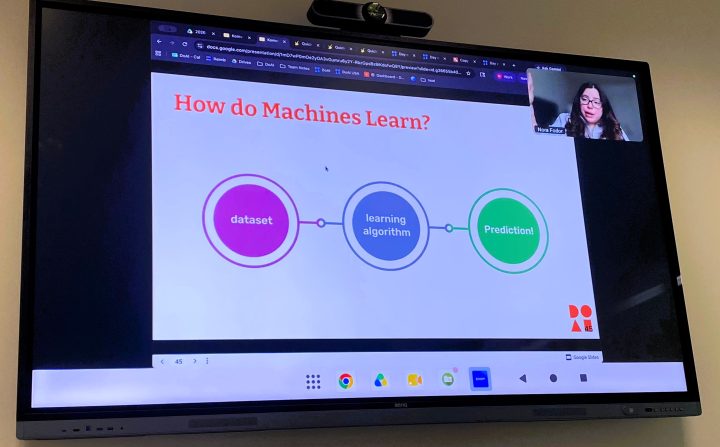
Artificial intelligence is often presented as an almost “magical” technology. The educational framework of MIT Day of AI seeks to demystify this perception. It shows that AI systems operate through data, algorithms and predictions. They learn through patterns. They generate responses based on what they have been trained to recognise. They are shaped by the choices of the people who design them, feed them with data and use them.
 This has direct pedagogical significance. A student who understands that a model recognises patterns but does not “understand” in the way a human being does develops a more mature relationship with technology. An educator who can explain why data needs diversity, accuracy and representativeness contributes to the cultivation of critical thinking. A school community that discusses artificial intelligence with knowledge and balance prepares students for a world in which technology will be a constant interlocutor.
A Place of History, Technology and Hospitality
The hospitality of Lavinia Corporation / Laskaridis Shipping played a special role in the success of the meeting. The Laskaridis organisation embraced the initiative in a meaningful way, offering a space of high aesthetic quality, excellent technical support and carefully curated hospitality, allowing participants to work in comfort and concentration.

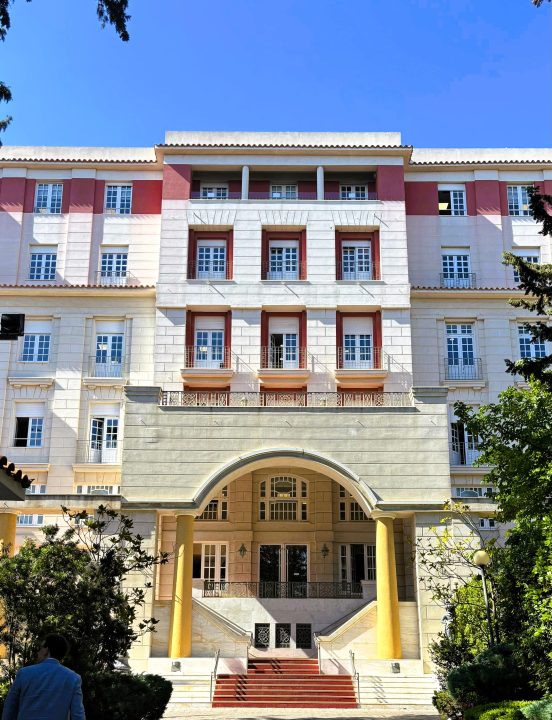 The choice of venue also carried symbolic significance. The seminar took place in the historic Cecil building in Kifissia, a landmark connected with the urban and architectural memory of the area. The Cecil Hotel began to be built in 1922, while the renovated building has now acquired a new use as a modern office space, preserving elements of its historic identity.
Hospitality was complemented by catering services, which created a particularly refined setting for welcoming participants and for the seminar breaks. Such details matter because an educational meeting is also shaped by the way it creates space for meaningful participation, the exchange of views, and human connection.
Inside the building, there is also a Chinese calligraphic inscription with the characters 龍馬精神 — Long Ma Jing Shen. The phrase is rendered as “the spirit of the dragon and the horse” and is used as a wish for vitality, strength, endurance and creative energy.

From a Seminar to a Broader Educational Pathway
The training session of 18 June marked a first applied step towards introducing AI literacy into the Greek school environment. The participating educators were introduced to a methodology that can be used in different educational settings and can serve as a starting point for further initiatives.
At the end of the session, possible next steps were also discussed, including the immediate creation of an online community, additional training sessions for educators, thematic modules on AI use policies in schools, and ways to assess the programme’s impact. This perspective is important, as the meaningful integration of artificial intelligence into education requires continuity, adaptation and cooperation.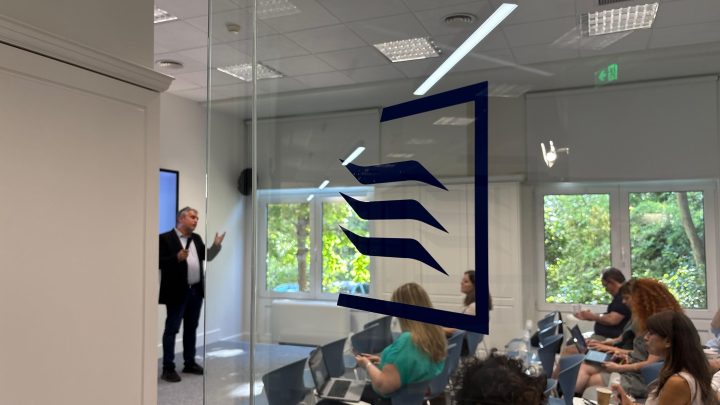
For Komvos, the MIT Day of AI Teacher Training in Greece forms part of a broader effort: to connect international knowledge with the needs of Greek society, to create practical bridges between science and education, and to strengthen access to critical skills for the future.
Artificial intelligence will deeply affect the way we learn, work, create and make decisions. Schools need to participate actively in this transition. Educators need tools, knowledge and support in order to guide students with confidence, critical thinking and a sense of responsibility.
The seminar in Kifissia showed that this path can begin with simple, understandable and meaningful steps: a classroom, an educator, a question, an example, a discussion on how new technologies can serve people and knowledge.