A symposium at the Academy of Athens on 10 November, with the participation of Komvos Partners Stamatios Krimigis and Athena Coustenis.
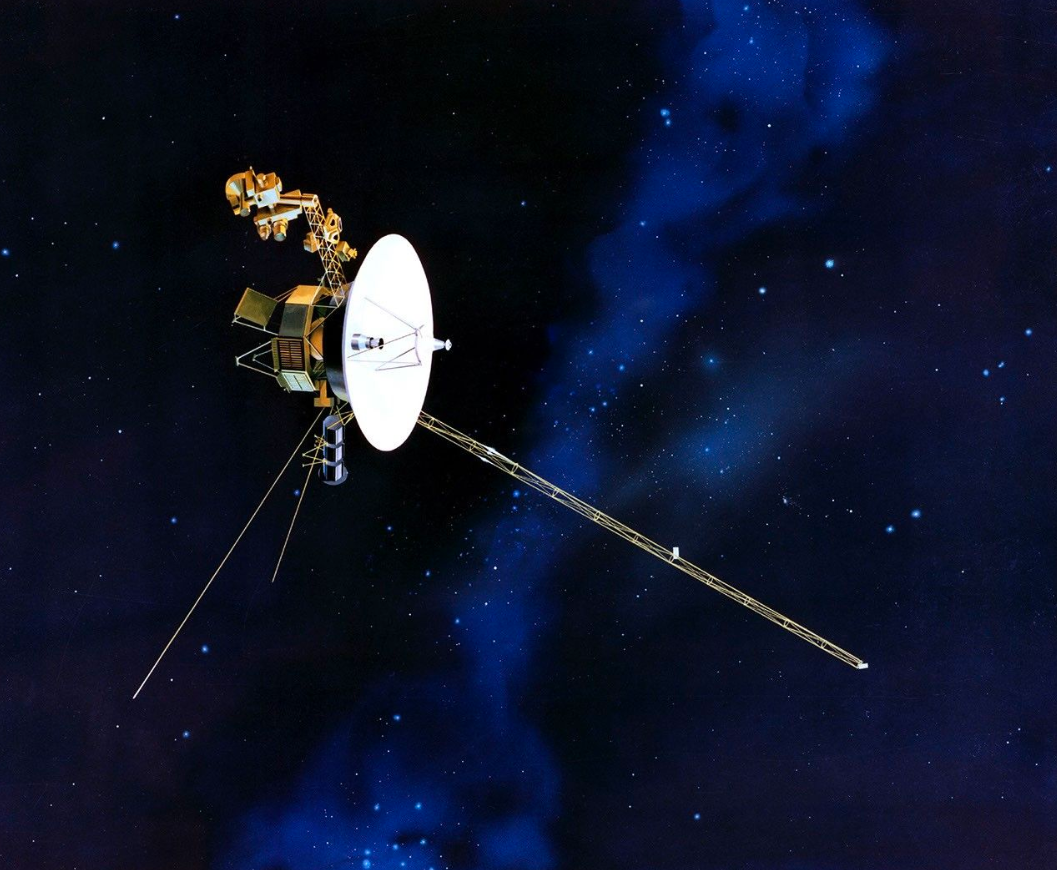
Voyager 1 is approaching a distance of one light-day from Earth, marking another milestone in space exploration. To mark the occasion, the Academy of Athens will host the symposium “Voyager – One Light-Day” on Tuesday, 10 November 2026, from 09:30 to 18:00, in its Ceremonial Hall.
A light-day is a unit of distance: it is the distance light travels in 24 hours, approximately 25.9 billion kilometres. According to NASA, Voyager 1 will reach this distance from Earth on 18 November 2026, eight days after the event. It will be the first human-made object to travel this far.
What does one light-day mean for Voyager?
At this distance, a radio signal from Voyager 1 will take 24 hours to reach Earth. A command sent from Earth will take just as long to reach the spacecraft. The minimum time between sending a command and receiving a response will therefore be approximately 48 hours.
The milestone comes almost half a century after the two spacecraft were launched in 1977. Voyager 1 entered interstellar space in 2012, followed by Voyager 2 in 2018. They are the only spacecraft to have operated beyond the heliosphere, the region shaped by particles and magnetic fields originating from the Sun.
The continuing missions provide measurements from an environment to which no other direct access is available. Greek research participation includes analysing data from the Low Energy Charged Particle (LECP) instruments aboard both spacecraft. The relevant programme at the Academy of Athens’ Research Center for Astronomy and Applied Mathematics’ Space Research and Technology Centre is supported by the Johns Hopkins Applied Physics Laboratory and led by Konstantinos Dialynas.
NASA’s current and former science leadership
The symposium brings together figures who have shaped NASA’s science programmes across different periods. Invited speakers include Nicola Fox, the current Associate Administrator for the Science Mission Directorate; her predecessor Thomas Zurbuchen, who served from 2016 to 2022; and Lennard Fisk, Associate Administrator for Space Science and Applications from 1987 to 1993.
The event on 10 November will also mark the first time that current and former leaders of NASA’s science programmes have participated in the same event. The joint presence of Nicola Fox, Thomas Zurbuchen and Lennard Fisk gives the symposium particular significance, connecting different periods of space research with its prospects today.
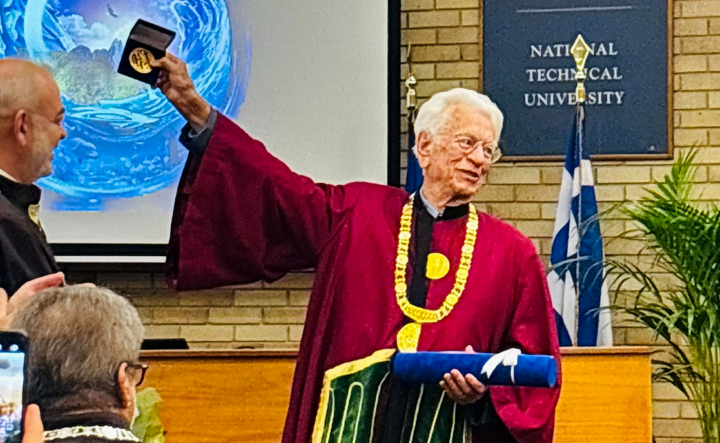
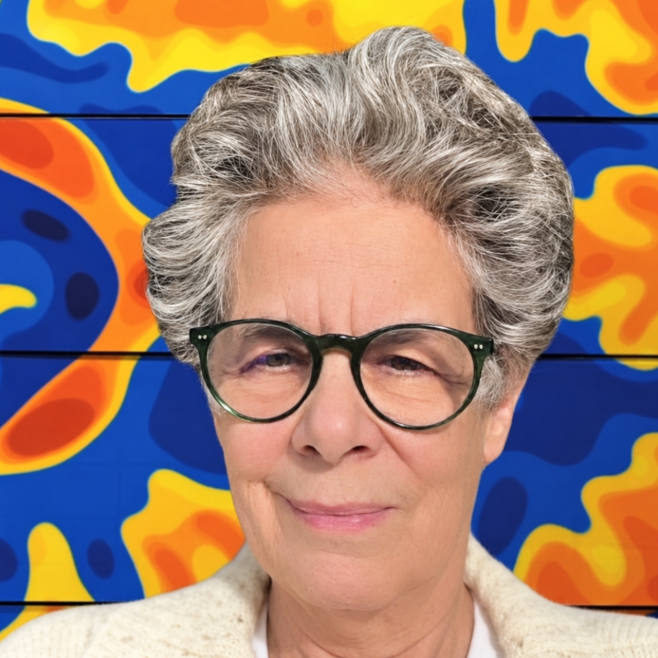
Stamatios Krimigis and Athena Coustenis at the Academy symposium
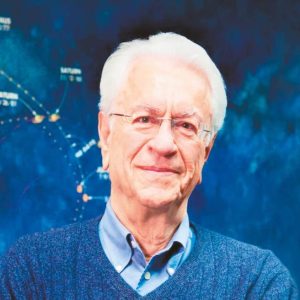
The symposium is organised by the Space Research and Technology Centre under the auspices of the Academy of Athens. Its organisers include Dr Stamatios Krimigis, the Centre’s supervisor and a principal investigator on instruments aboard the Voyager missions, and Konstantinos Dialynas, who heads the Centre. Invited speakers also include Dr Athena Coustenis, Research Director at CNRS, based at the Paris Observatory.
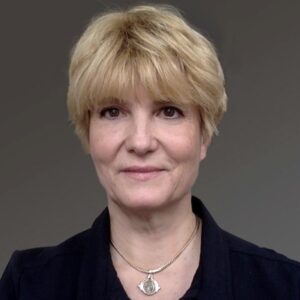
Stamatios Krimigis and Athena Coustenis are Partners of Komvos and lead its “Space Science, Technology and Industry” initiative. The initiative seeks to connect scientific knowledge and international experience with opportunities for Greece’s development in the space sector.
The subject will be discussed in a special working session at the 4th Annual Working Conference of Komvos on 23 November 2026, at the National Bank of Greece’s Karatzas Building.
The symposium will be conducted in English, with on-screen Greek translations of the presentations and Greek interpretation through headsets for the discussion with the audience.
Read the Academy of Athens announcement and symposium details.